Festive Sarees
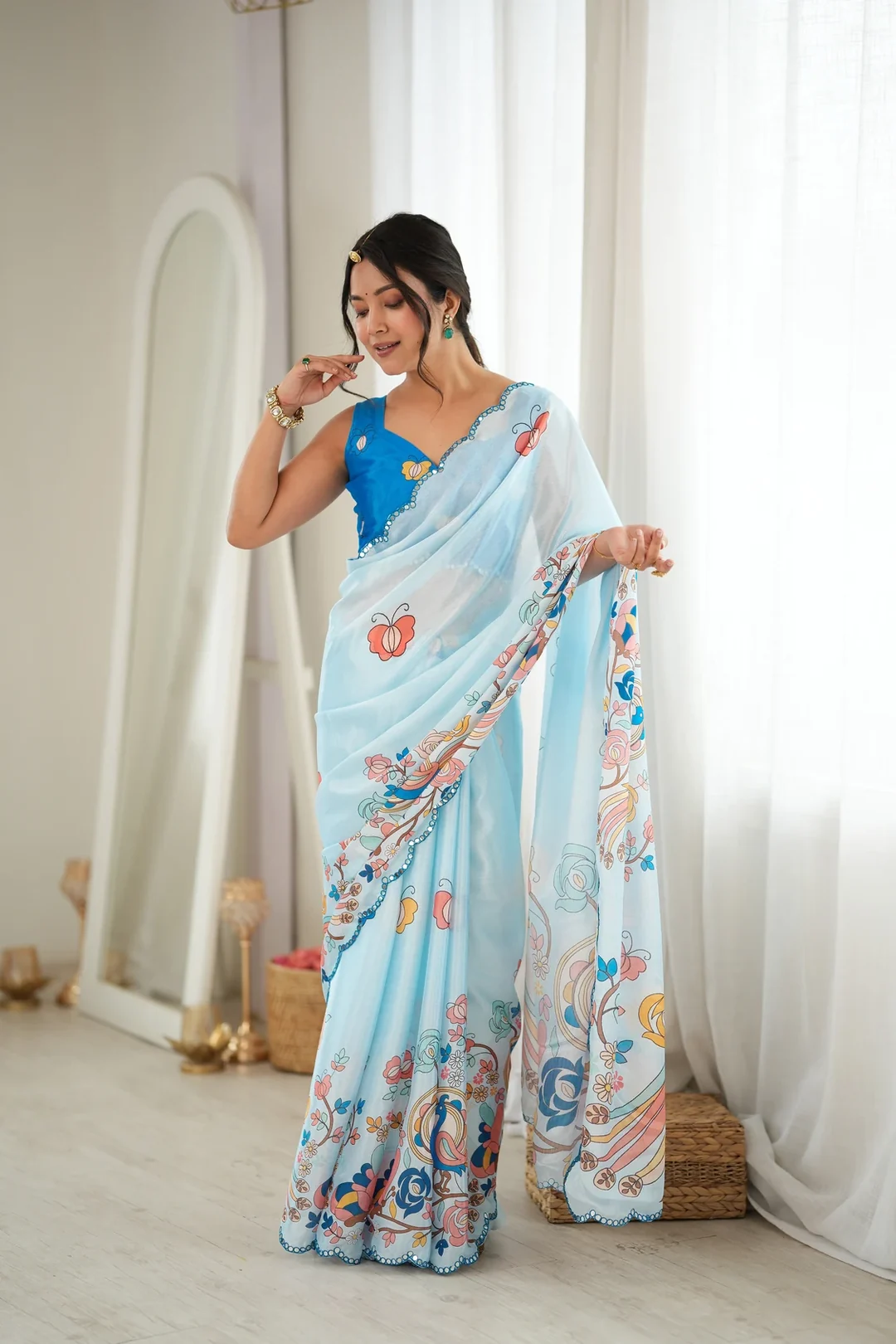
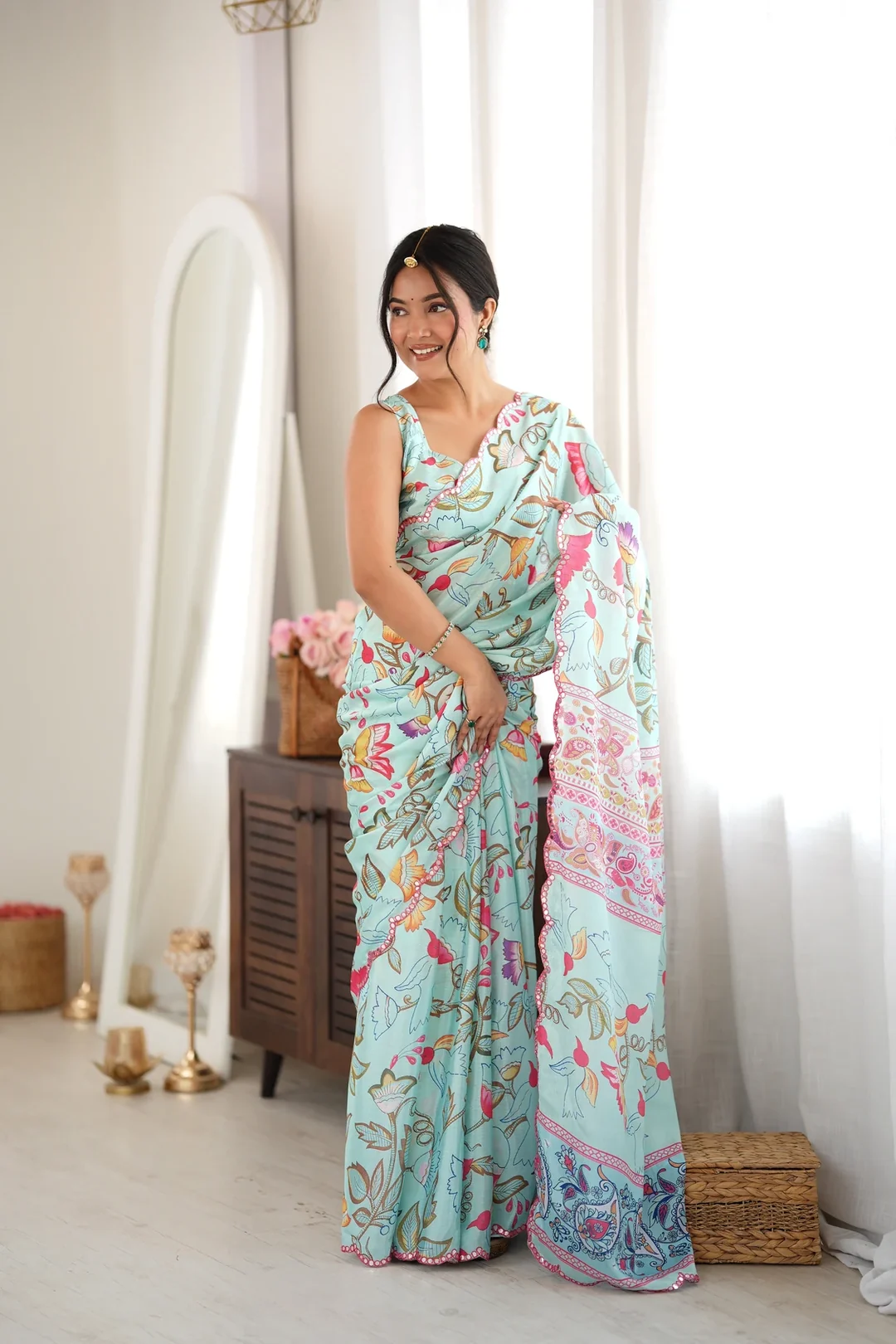
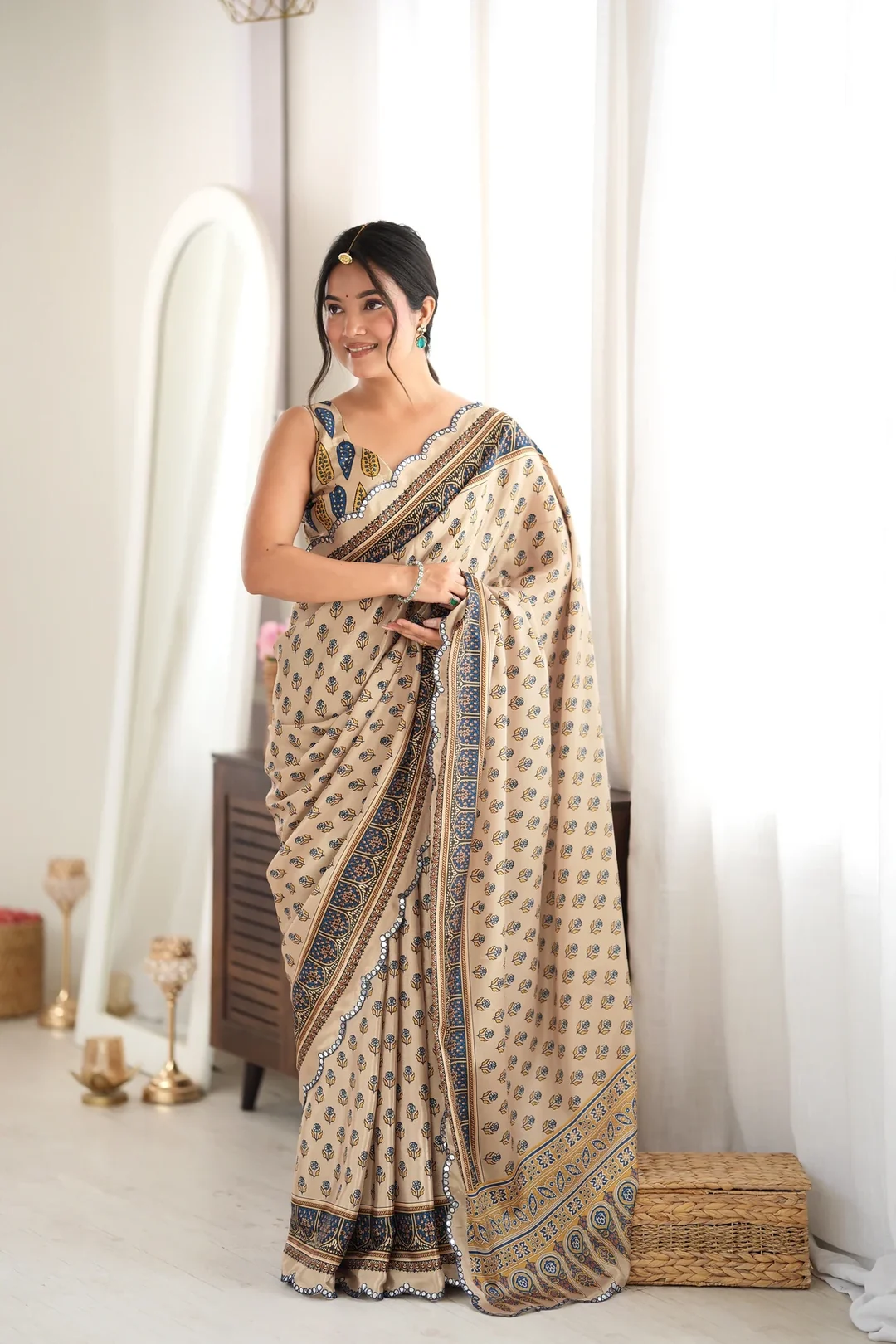
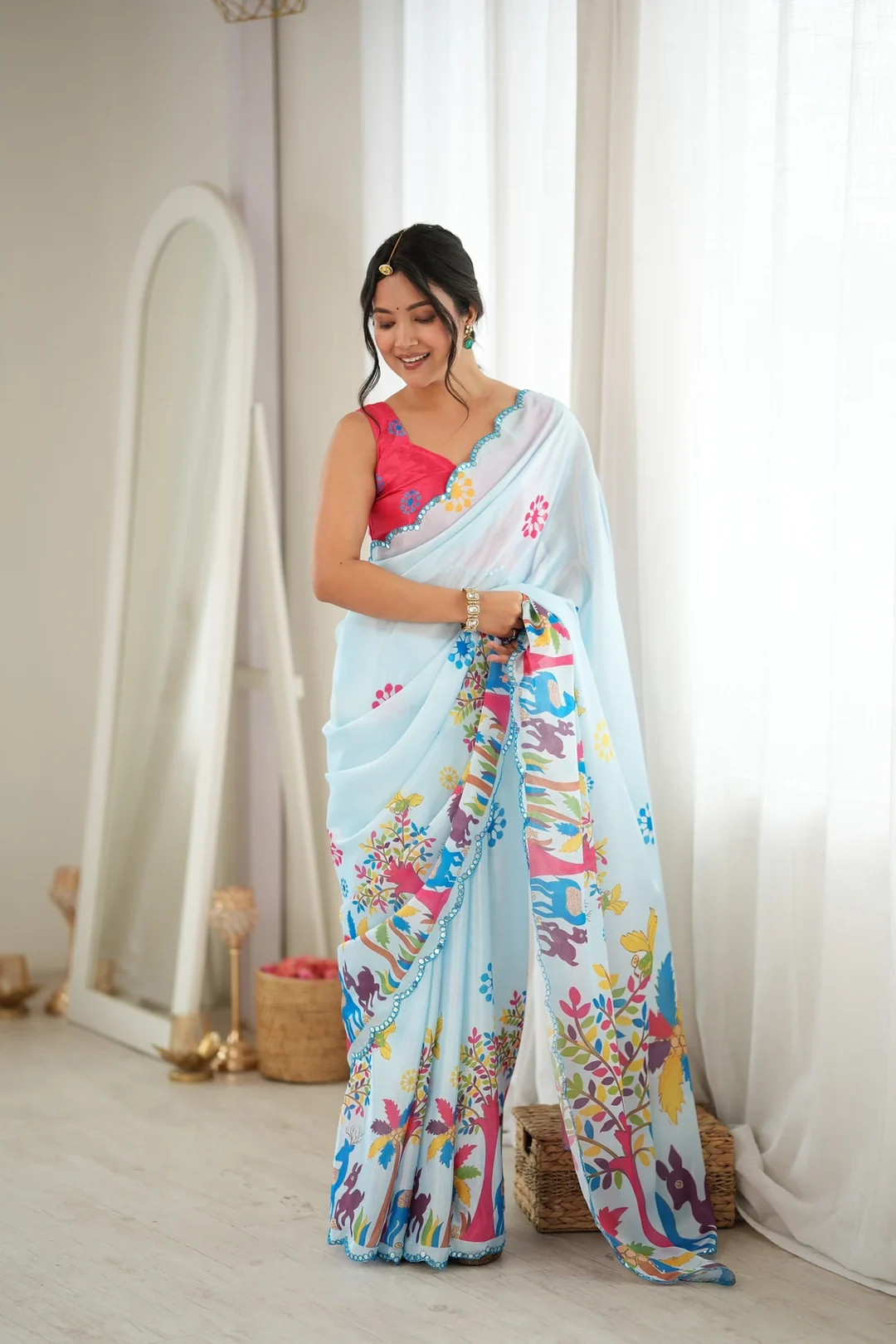
Aqua Blue Botanical Chinon Festive Saree with Mirror Cut Work
₹1,599₹2,700
165 products
Festive Sarees
Festive Sarees
Festive Sarees
Festive Sarees
Festive Sarees
Festive Sarees
Festive Sarees
Festive Sarees
Festive Sarees
Festive Sarees
Festive Sarees
Festive Sarees
Festive Sarees
Festive Sarees
Festive Sarees
Festive Sarees
Festive Sarees
Festive Sarees
Festive Sarees
Festive Sarees
Festive Sarees
Festive Sarees
Festive Sarees
Festive Sarees
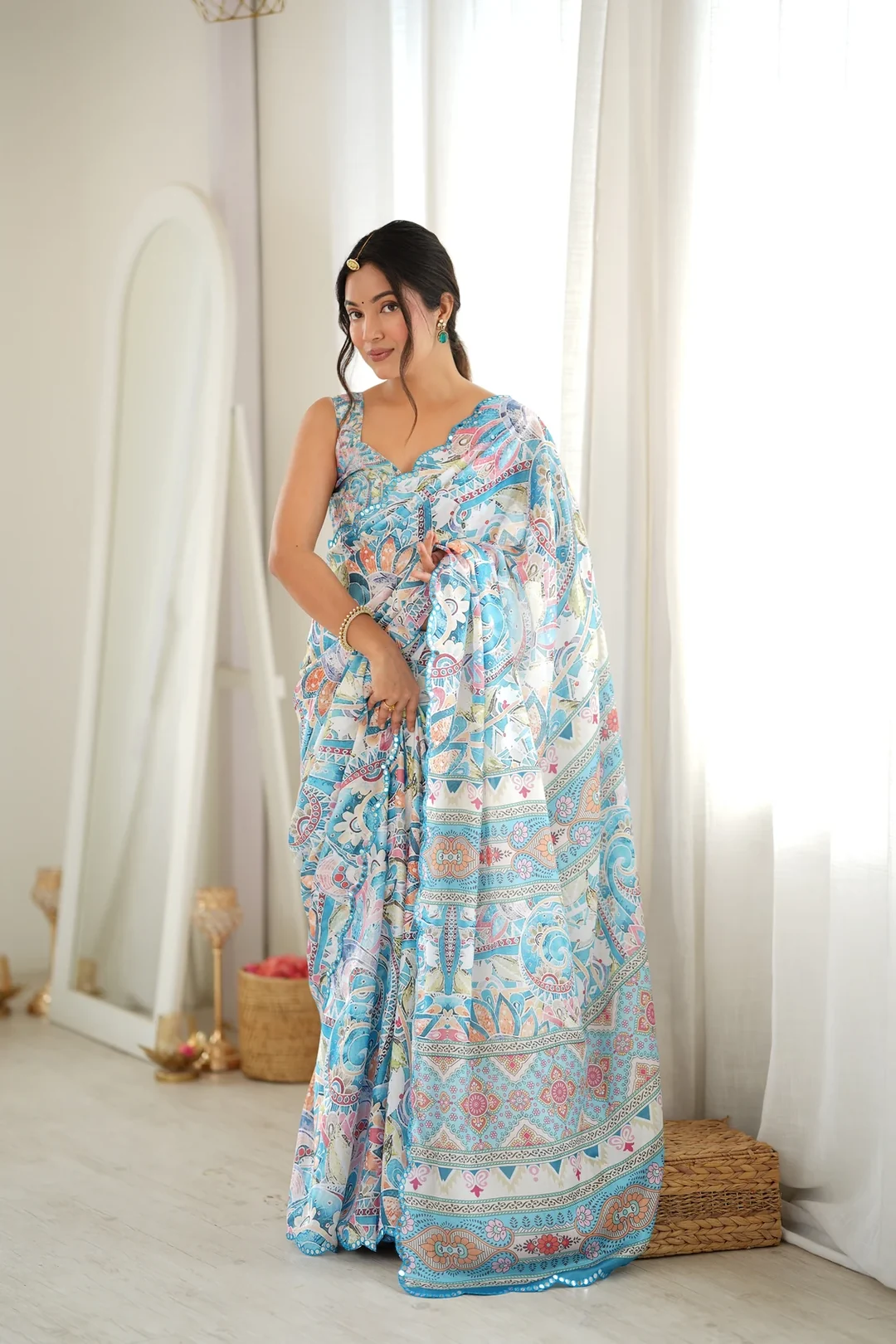
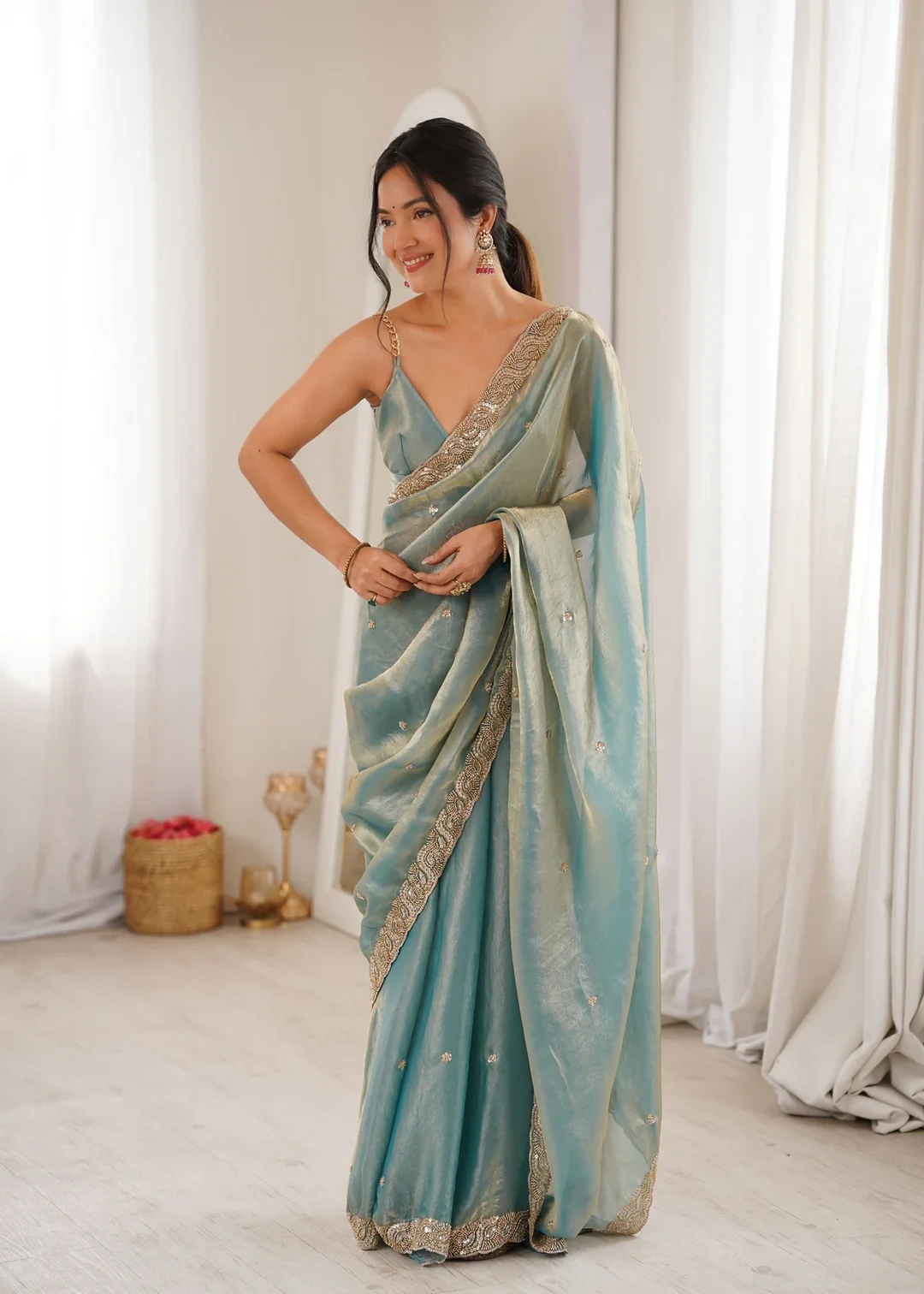
Festive Sarees is the 134-design run built for the October and November calendar, priced from ₹1,599 to ₹6,199 with the middle near ₹3,599. Every listing states its fabric and its work: Chinon on 37, two-tone satin silk on 31, a denser plain satin on 15 and crepe satin silk on 11. Mirror work appears on 45, digital print on 60, pearl or moti work on 63 and bandhani on 18. The blouse is unstitched on 123 listings, given as a 0.80 metre piece on 122. Forty-seven designs have a drape video.
The Indian festive run is short and crowded, and each date asks for a slightly different weight of cloth. These are the fixed dates for the season ahead.
| Occasion | Date | What tends to suit it |
|---|---|---|
| Sharad Navratri | 11 to 19 October 2026 | Nine days of movement. Lighter Chinon and crepe satin silk, colour-led rather than work-led |
| Dussehra | 20 October 2026 | One long daytime event. A printed or bandhani base carries it without weight |
| Karva Chauth | 29 October 2026 | Evening-into-night. Red and maroon two-tone satin silk, mirror or pearl detailing |
| Dhanteras | 6 November 2026 | Shopping and puja at home. Satin silk with a modest border sits comfortably |
| Diwali | 8 November 2026 | Photographs and lamps. Sequin, mirror-cut and pearl work read well under low light |
Three things separate them in this catalogue. The base cloth is chosen to catch light rather than to stay matte, which is why 31 listings use two-tone satin silk that shifts colour as it moves. The surface work is denser: 45 listings carry mirror work, 37 of them mirror-cut, 63 carry pearl or moti detailing and 42 carry stone work. And the print is usually digital rather than woven, on 60 of the 134, which is what allows large placed motifs on a pallu without adding weight.
Chinon, on 37 listings, is the lightest of the four main bases. It is a fine crepe-like fabric that falls in soft folds and stays cool, which is why it works across nine days of Navratri. Two-tone satin silk is woven with different warp and weft colours so the shade changes with the angle; it has more body and photographs well but sits warmer. A denser plain satin, on 15 listings, is smoother and heavier again. Crepe satin silk, on 11, splits the difference: matte on one face, satin on the other, and it pleats sharply without slipping.
Mirror-cut work sets small cut-glass discs into the fabric, each held by a ring of stitching. Thirty-seven listings pair it with a designer digital print, so the print carries the pattern and the mirrors sit at the points where light should catch. Bandhani appears on 18 listings, and on most of them as a bandhani print rather than a tied-and-dyed cloth, which is what the spec line says. Pearl and moti work, on 63 listings, is small beadwork used to outline a motif rather than to fill it.
The blouse is unstitched on 123 of the 134 listings and given as a 0.80 metre piece on 122. That is fabric, not a finished garment, and it needs a tailor. A useful habit for this season is to carry an old well-fitting blouse to the tailor as a pattern rather than being measured fresh, because tailors run full through October and a copy is faster than a fitting.
One hundred and twenty-five of the 134 listings state a dispatch window: 73 say next day after stock confirmation and 52 say two to three days after stock confirmation. Dispatch is when the parcel leaves, not when it arrives, and it does not include tailoring. If the blouse has to be stitched, count backwards from the function date and allow for the tailor as well as the courier. Ordering in the last week of September for a Navratri that starts on 11 October 2026 leaves room for both.
The nine-colour custom takes its colour from the weekday, not from the night, so the sequence changes every year. Navratri 2026 opens on Sunday 11 October and closes on Monday 19 October, which gives this order.
| Night | Date | Colour |
|---|---|---|
| 1 | Sunday 11 October | Orange |
| 2 | Monday 12 October | White |
| 3 | Tuesday 13 October | Red |
| 4 | Wednesday 14 October | Royal Blue |
| 5 | Thursday 15 October | Yellow |
| 6 | Friday 16 October | Green |
| 7 | Saturday 17 October | Grey |
| 8 | Sunday 18 October | Substituted, commonly Peacock Green |
| 9 | Monday 19 October | Substituted, commonly Pink or Purple |
Two honest notes. The custom is modern rather than scriptural, it took its present form in Maharashtra in the 2000s, and it is followed most closely there and in Gujarat. And the last two nights repeat Sunday and Monday, so publications substitute two extra colours and do not all choose the same ones. If your family or workplace has circulated a list, use that one. Our Navratri colours guide sets out the full reasoning, the weekday table and the nine forms of Durga.
You do not need nine sarees. Let one element carry the colour of the day and repeat the rest, and note that the multicolour and bandhani prints in this collection read correctly on several of the nine nights at once. Within this run of 134 designs the widest colour choice sits in pink and purple, then green and red; orange, grey and peacock green are the narrowest, so buy those nights first if your plan depends on them.
Karva Chauth falls on Thursday 29 October 2026. Red dominates because the day is tied to marriage, and red is the colour of the North Indian bridal wardrobe: many women wear their own wedding saree or lehenga, or something deliberately close to it. Maroon, wine and deep rust sit in the same family and are worn just as widely. This is convention and sentiment rather than rule, and plenty of women wear pink, gold or their own preference instead, particularly for a second or tenth Karva Chauth rather than a first.
Two practical points shape the choice. The fast is broken after moonrise, so the evening is the part that is seen and photographed, which favours a base that catches lamplight: sequin, mirror, zari, pearl or stone work all read well after dark. And the day is long and without water, so a saree that is heavy to carry from morning is worth avoiding. A two-tone satin silk or a crepe satin silk with surface work gives you the shine without the weight of a true bridal fabric. Within this collection the red and maroon designs are the ones stocked with this evening in mind.
They are opposite briefs on the same festival, and it is worth dressing them differently. Dhanteras falls on Friday 6 November 2026 and Diwali on Sunday 8 November, with Bhai Dooj on the 10th.
| Home puja and Dhanteras | Diwali party | |
|---|---|---|
| What you are doing | Sitting, bending, lighting diyas, cooking and serving | Standing, greeting, being photographed under low light |
| Fabric | Light and breathable. Chinon, cotton silk, chiffon, crepe | More body and sheen. Two-tone satin silk, satin, organza |
| Surface work | Restrained. A printed or bandhani base carries it | Sequin, mirror-cut, pearl and stone, which read under lamps |
| Practical | Keep loose ends and heavy borders away from open flames | Secure the pallu properly; you will be on your feet for hours |
There is a real safety point behind the first row. Diyas, candles and phuljhadi sit at floor and hand height all evening, and a long chiffon or net pallu near an open flame is a genuine hazard. For the puja itself, pin the pallu, keep the drape close, and leave the sheerest fabrics and the most flammable net work for a party held away from lit lamps.
Dussehra falls on Tuesday 20 October 2026, the day after Navratri ends. It is mostly a daytime occasion, often outdoors at a Ramlila ground or a Ravan dahan, with a lot of standing and walking and October sun still on it. That makes it the least dressed-up date of the season. A printed or bandhani base in a light fabric does the whole job, and heavy surface work is more burden than benefit in daylight, where it does not read the way it does under lamps. If you have worn something heavy for the ninth night of Navratri, Dussehra is the day to go lighter, not heavier.
The season runs from 11 October to 10 November 2026, and buying one outfit per date is neither necessary nor sensible. Three things stretch furthest across it.
The one date worth its own outfit is Karva Chauth, because the colour brief is specific and the evening is photographed.
Diwali falls on 8 November 2026 and Dhanteras on 6 November 2026. Of the 134 listings here, 73 state dispatch next day after stock confirmation and 52 state two to three days. Dispatch is not delivery, and an unstitched blouse still needs a tailor, so ordering by mid-October leaves room for both steps.
Sharad Navratri runs from 11 to 19 October 2026, so the saree has to survive nine days of garba, travel and standing. Chinon, on 37 listings in this category, is the lightest base here and stays cool. Colour matters more than weight across Navratri, and a lighter fabric with a printed pattern is easier to wear repeatedly than heavy surface work.
Karva Chauth falls on 29 October 2026 and is traditionally kept in red or maroon, often in whatever was worn or gifted at the wedding. This category carries two-tone satin silk in those shades, which shifts tone under light and photographs well in the evening. Pink, rani and wine are common alternatives where red is not preferred.
On 123 of the 134 listings the blouse is unstitched, and 122 give it as a 0.80 metre piece. That is a length of matching fabric rather than a ready blouse, so a tailor has to cut and stitch it to your measurements. Allow time for that in October, when tailors take longer than usual to return work.
Mirror-cut work sets small cut-glass discs into the cloth, each anchored by a ring of stitching so the disc cannot fall out. Thirty-seven listings here carry mirror-cut work and every one pairs it with a digital print, so the mirrors sit where the pattern wants light. Eight more carry mirror handwork instead. It reads brightest under lamps and diyas rather than in daylight.
Chinon is a light, fine fabric with a soft crepe-like surface that falls in loose folds instead of holding stiff pleats. Thirty-seven festive sarees here use it. It suits long daytime functions and warm weather because it stays cool and weighs very little, though it drapes softly rather than sharply and needs pinning at the pleats.
Prices in this category run from ₹1,599 to ₹6,199, with the middle of the range near ₹3,599. The lighter printed Chinon designs sit at the lower end. Two-tone satin silk with mirror-cut, pearl or stone work sits higher, because the cost here follows the density of surface work rather than the size of the saree.
Forty-seven of the 134 festive listings carry a drape video, and 99 have more than one photograph. A video is worth watching on satin silk in particular, because the two-tone weave changes colour as the cloth turns and a single still image cannot show that. The colour note on 117 listings warns that screen settings shift the shade.