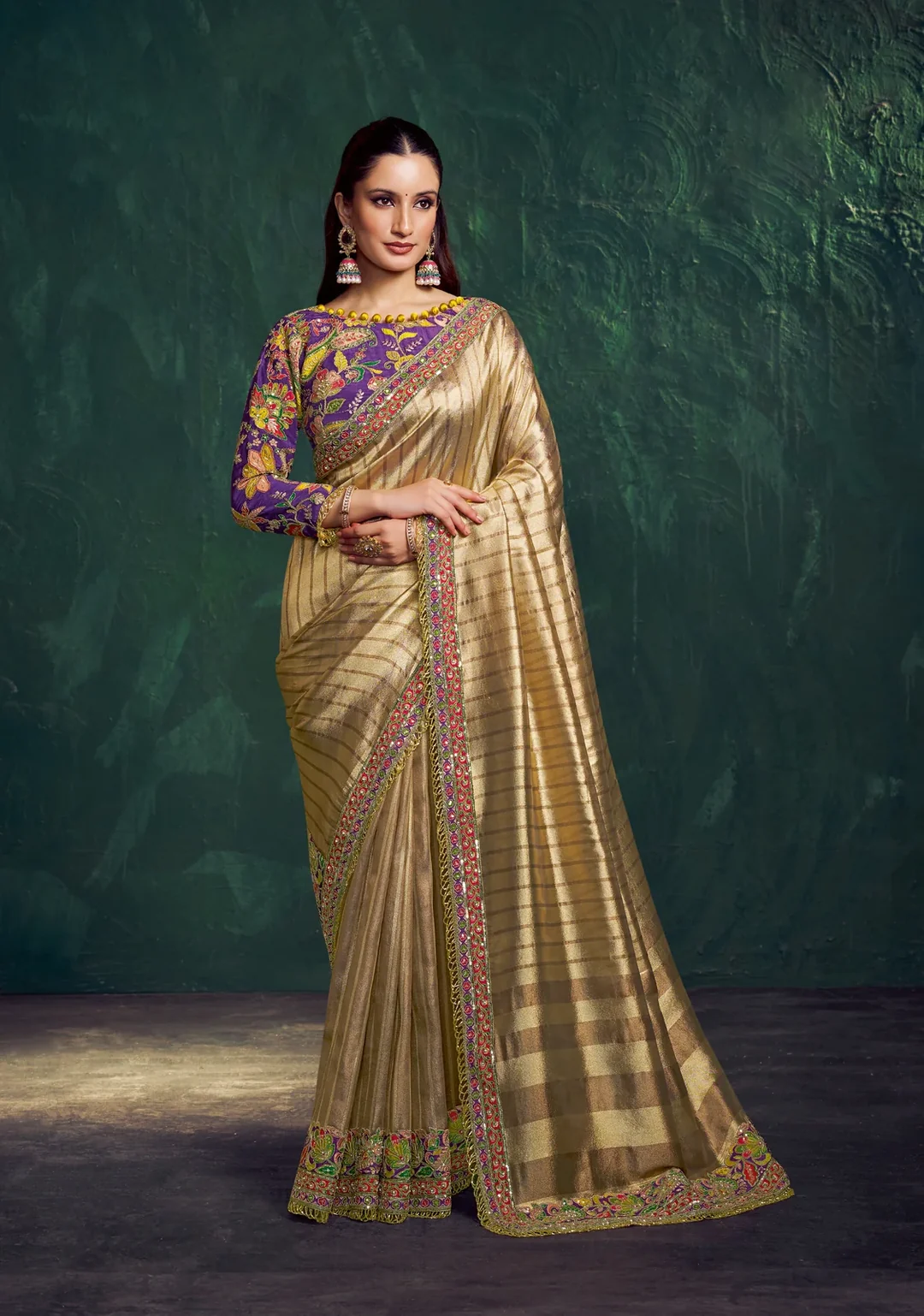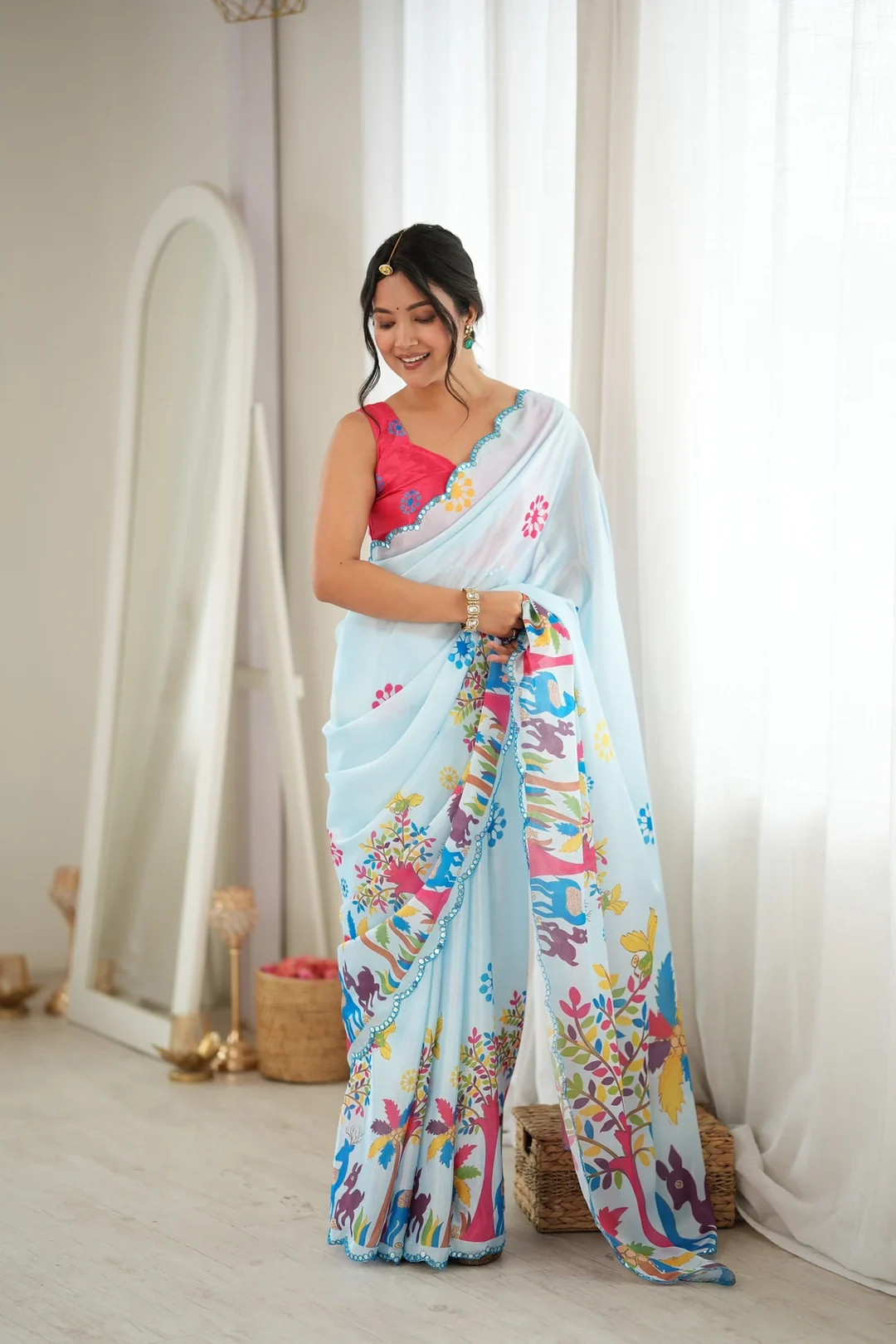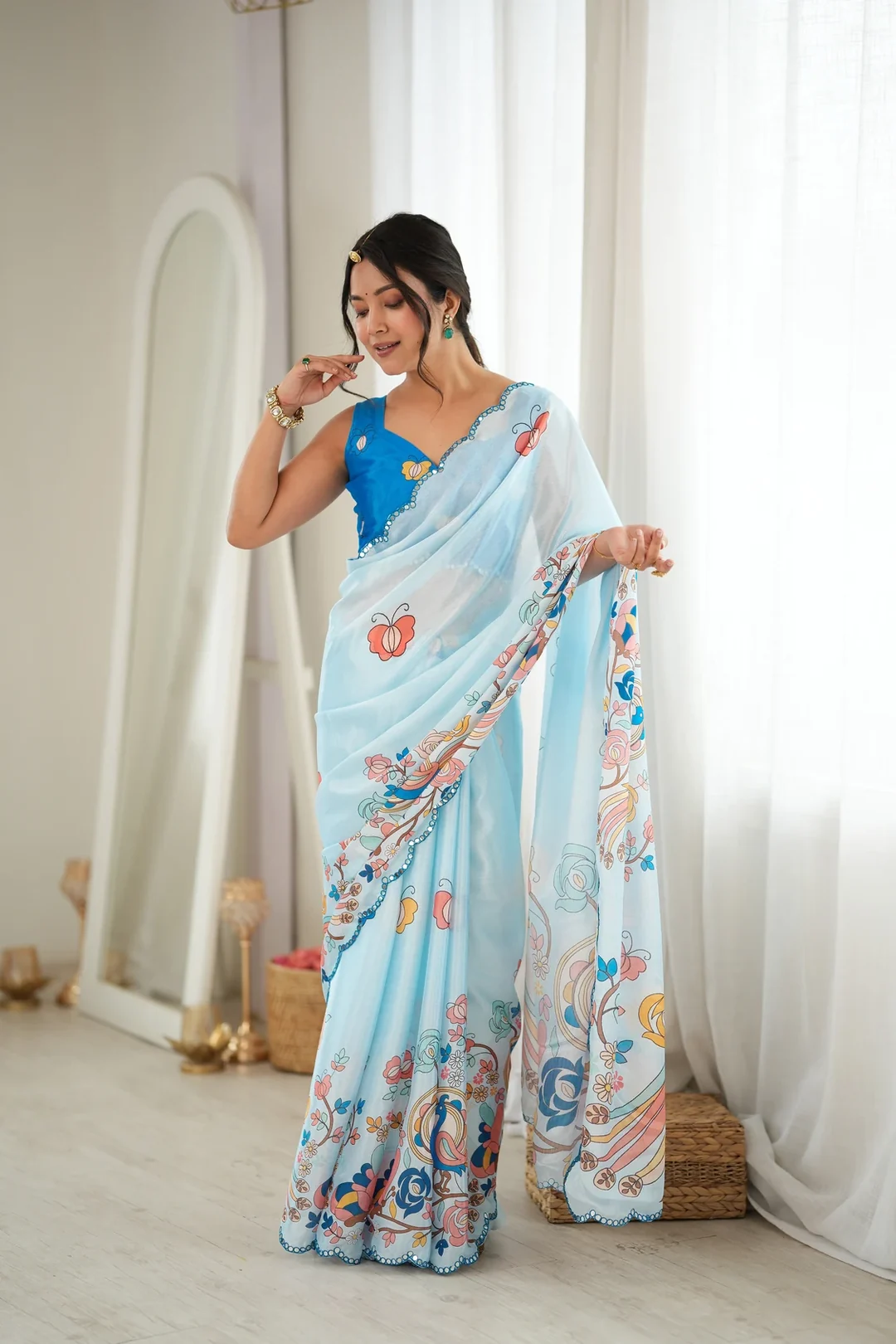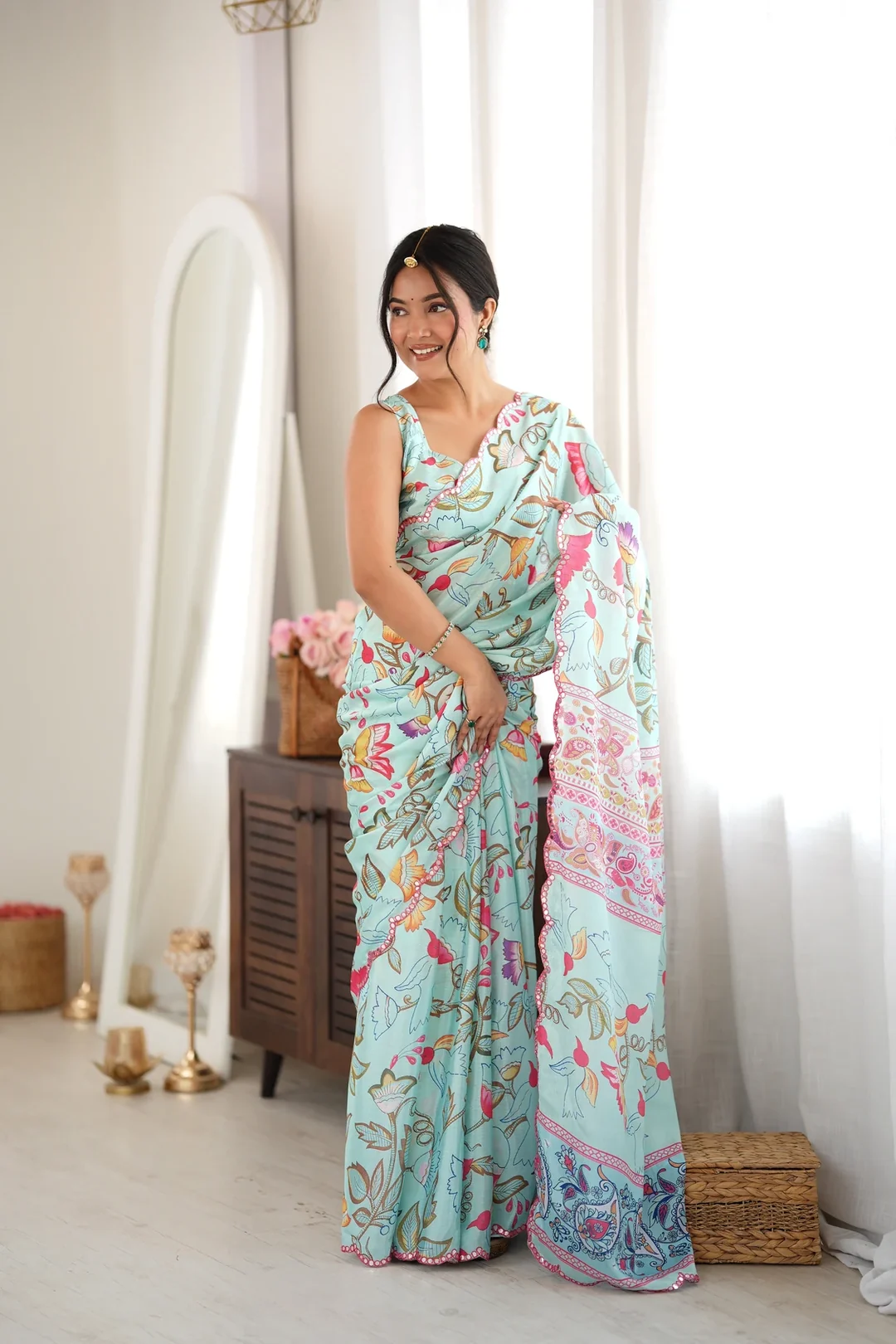
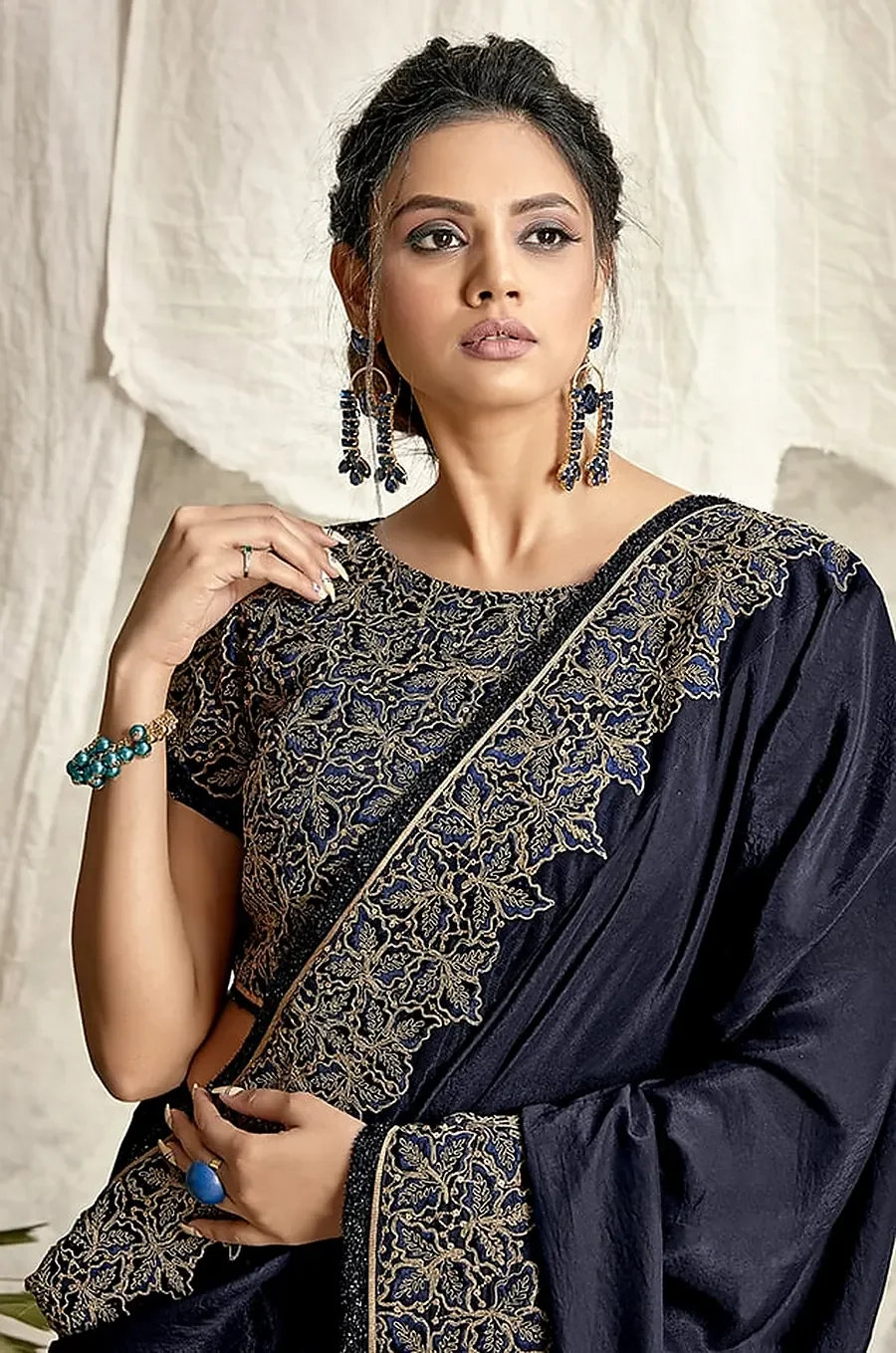
What is cord embroidery?
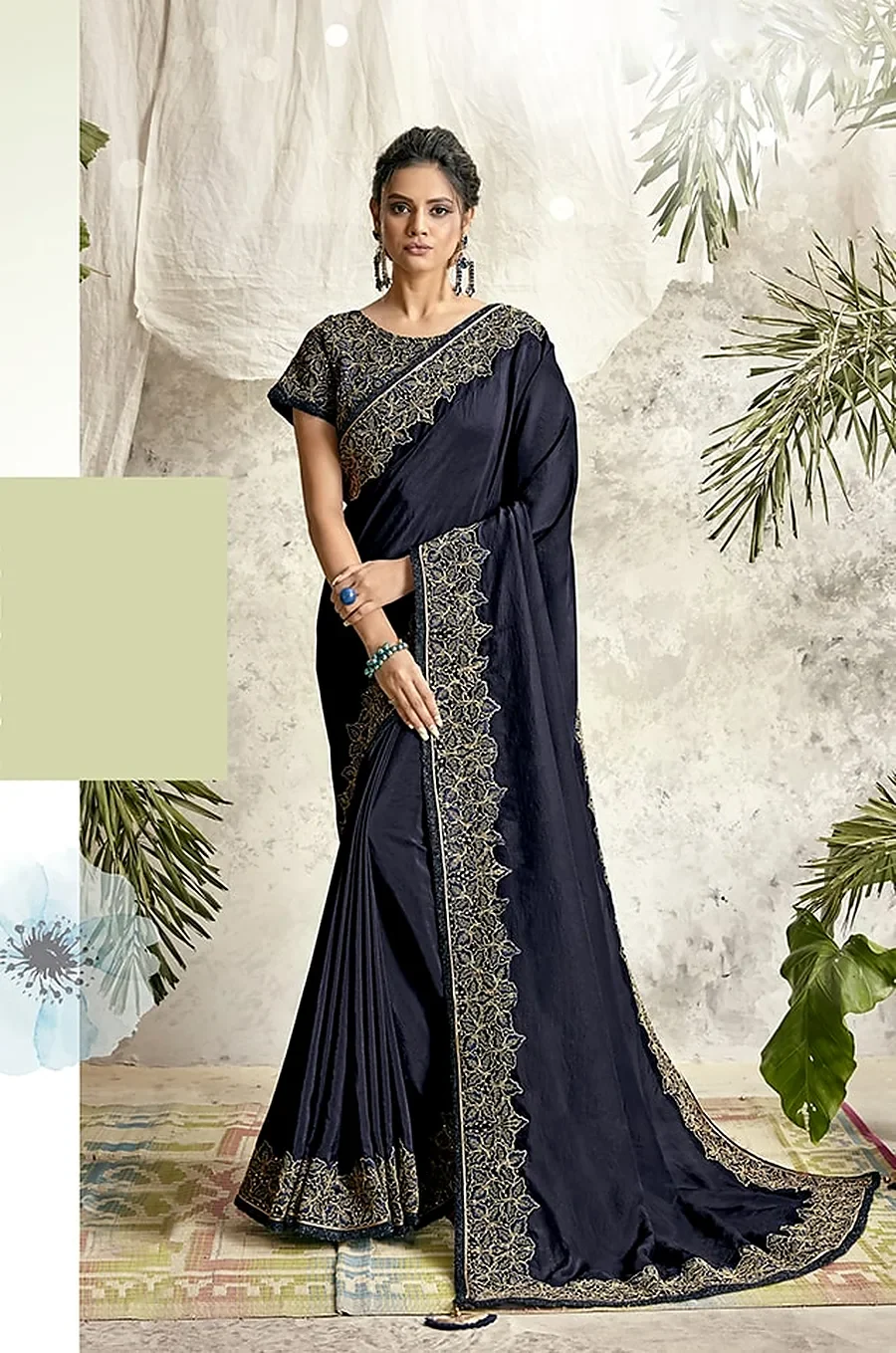
A thick thread or cord is laid along the surface of the fabric and stitched down over it, which produces raised lines with real relief you can feel. It covers ground faster than fine embroidery and gives a bolder, more sculptural effect than flat stitching does.
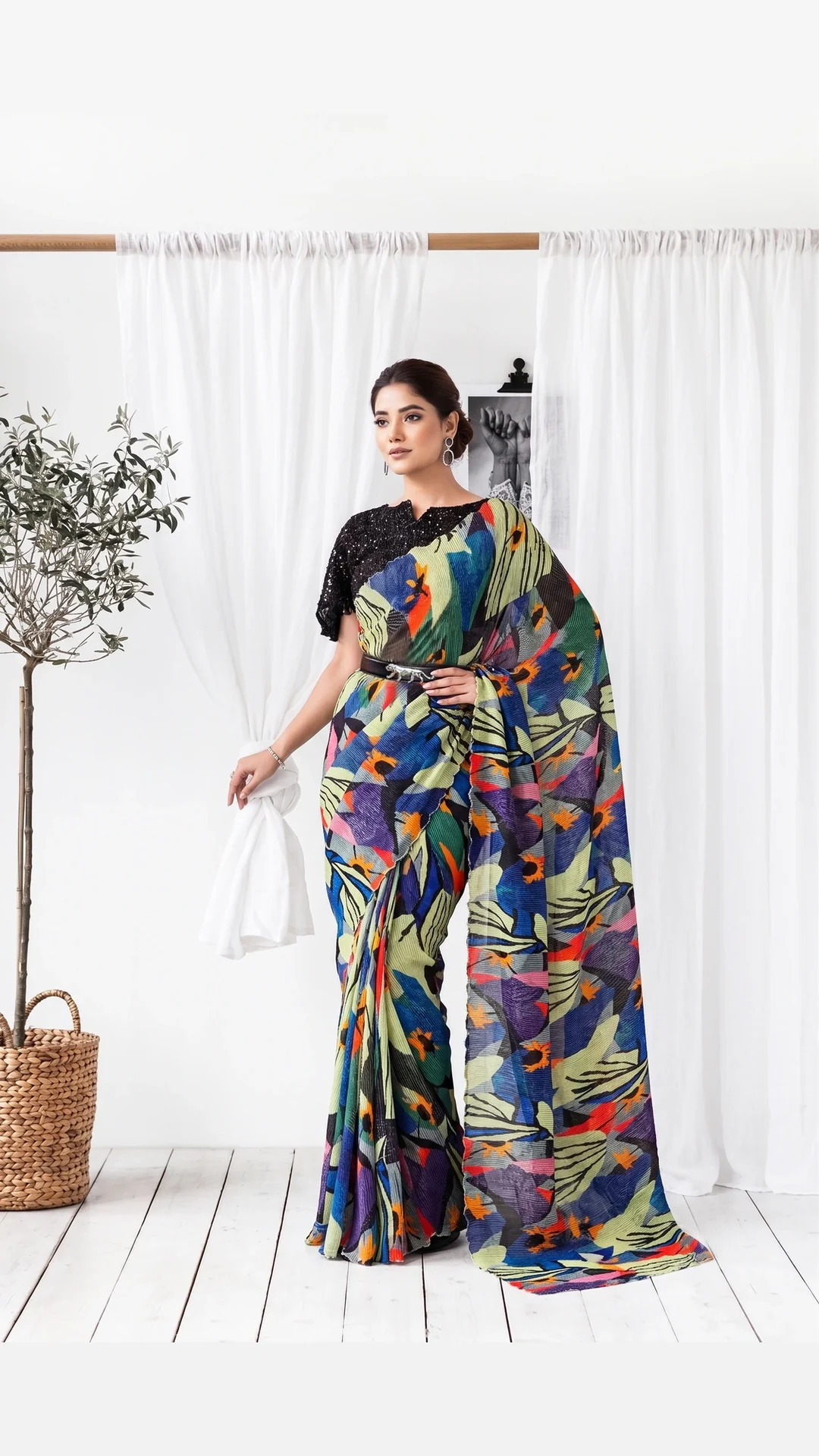
Why combine three kinds of work on one saree?
Because each contributes something different. Cord work gives relief, sequins give hard points of light, and resham gives a soft lustre along the stitch. Used together they produce texture, sparkle and quiet sheen on one surface rather than a single repeated effect.
Why is a dark base used for heavy work?
A dark ground absorbs light, so every raised line and every sequin stands out sharply against it. On a pale base the same work would blend into the brightness of the fabric around it and lose definition, which is why navy, black and deep shades are used so often.
Is silk georgette strong enough to carry heavy work?
Yes. The crinkled grain gives the weave body, so it holds applied work without sagging out of shape, and the pleats still fall properly under the additional weight. A very light or slippery base under this much work would lose its line quite quickly.
What do I do about the blouse?
It is supplied unstitched, so it goes to a tailor to be cut to your own measurements. Allow a few days for that, and keep the finish plain: with cord, sequins and resham already on the drape, a worked blouse would make the outfit compete with itself.
Can I return this?
Yes. Vpnam has a 7-day return window, and the full terms are in the Refund and Returns Policy. Contact us within 7 days of delivery if the item arrives damaged or defective, an item is missing, or a different product was sent, and keep the item, tags and original packaging unused while the claim is reviewed. Worn, washed, altered or tailored products cannot be returned.