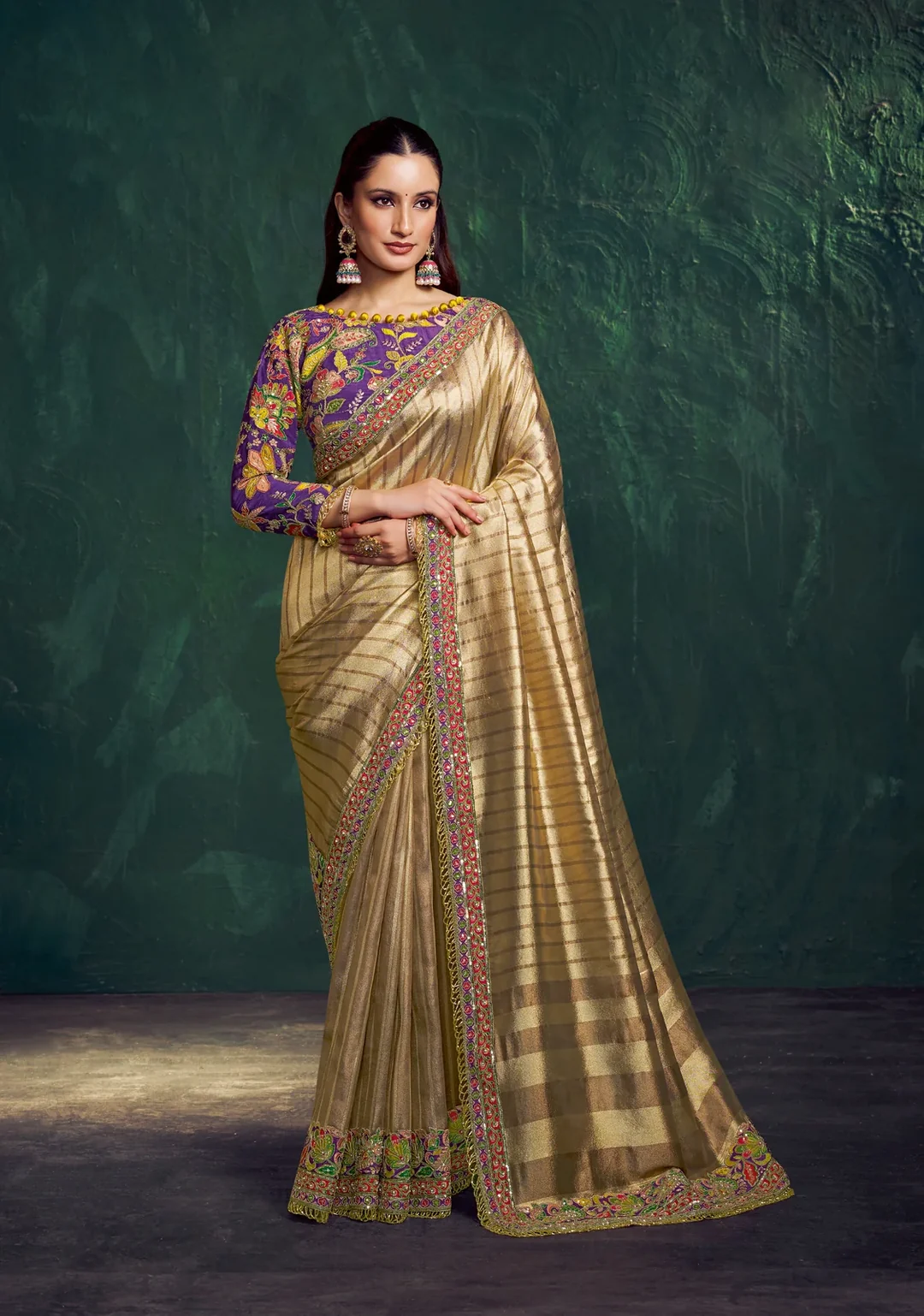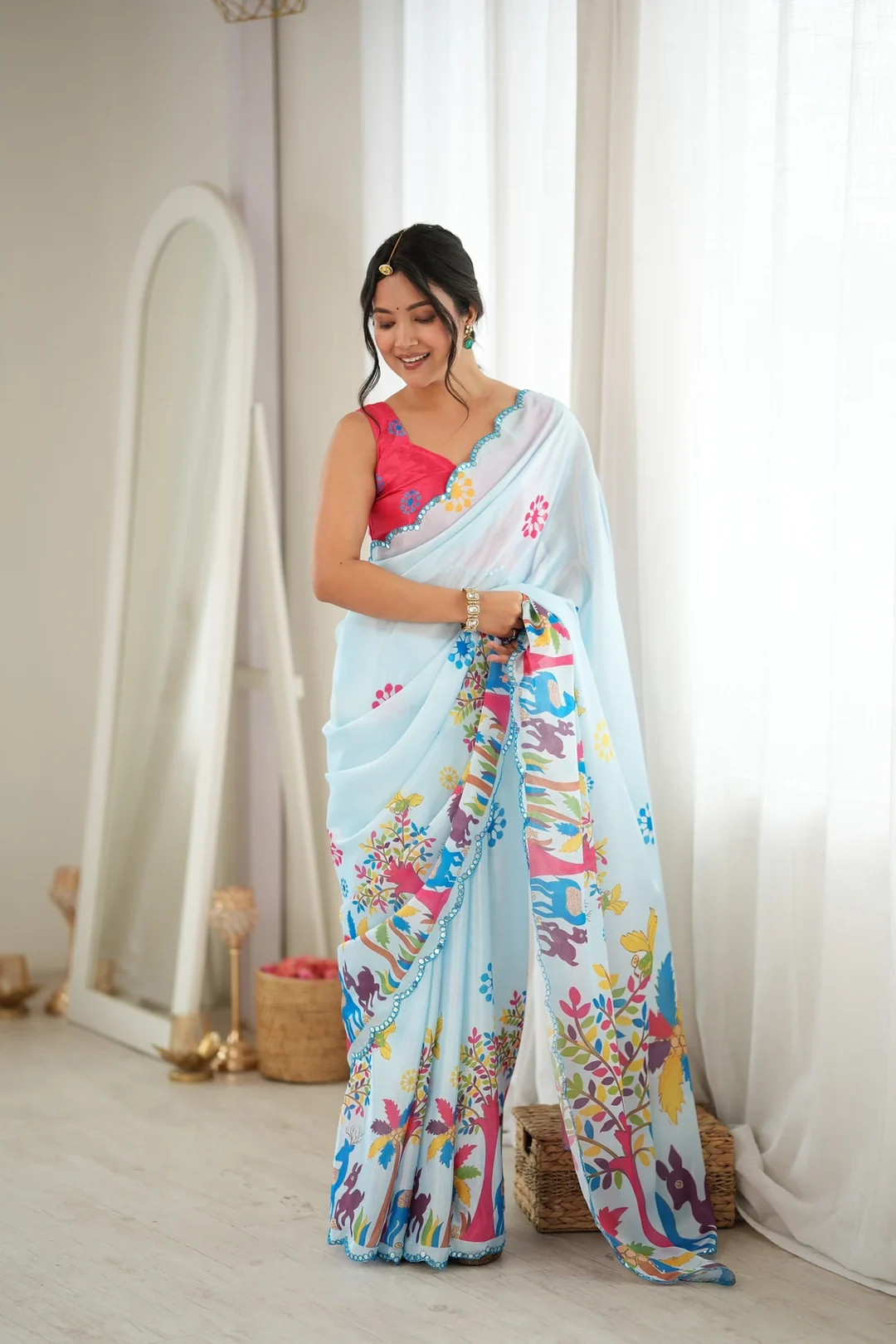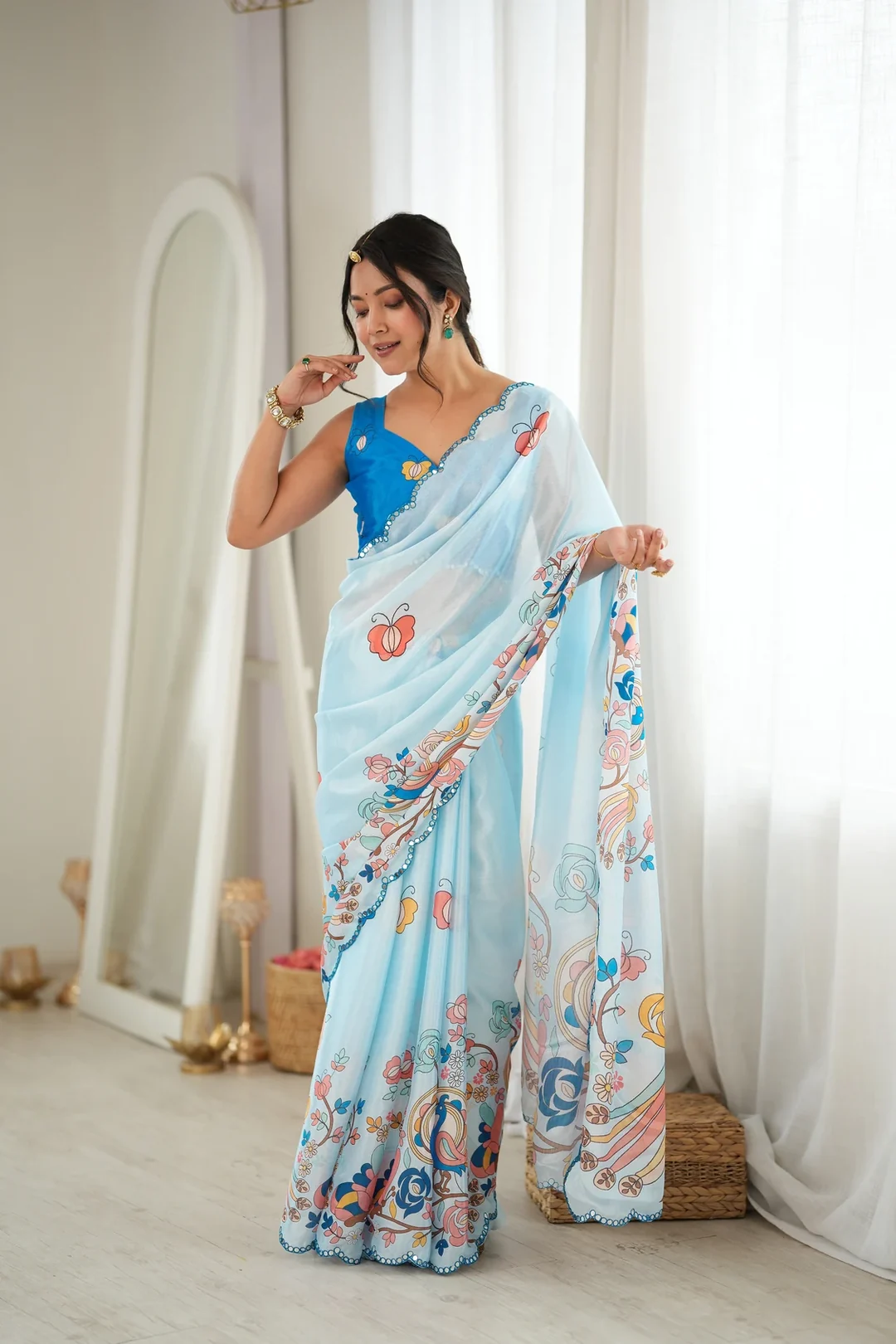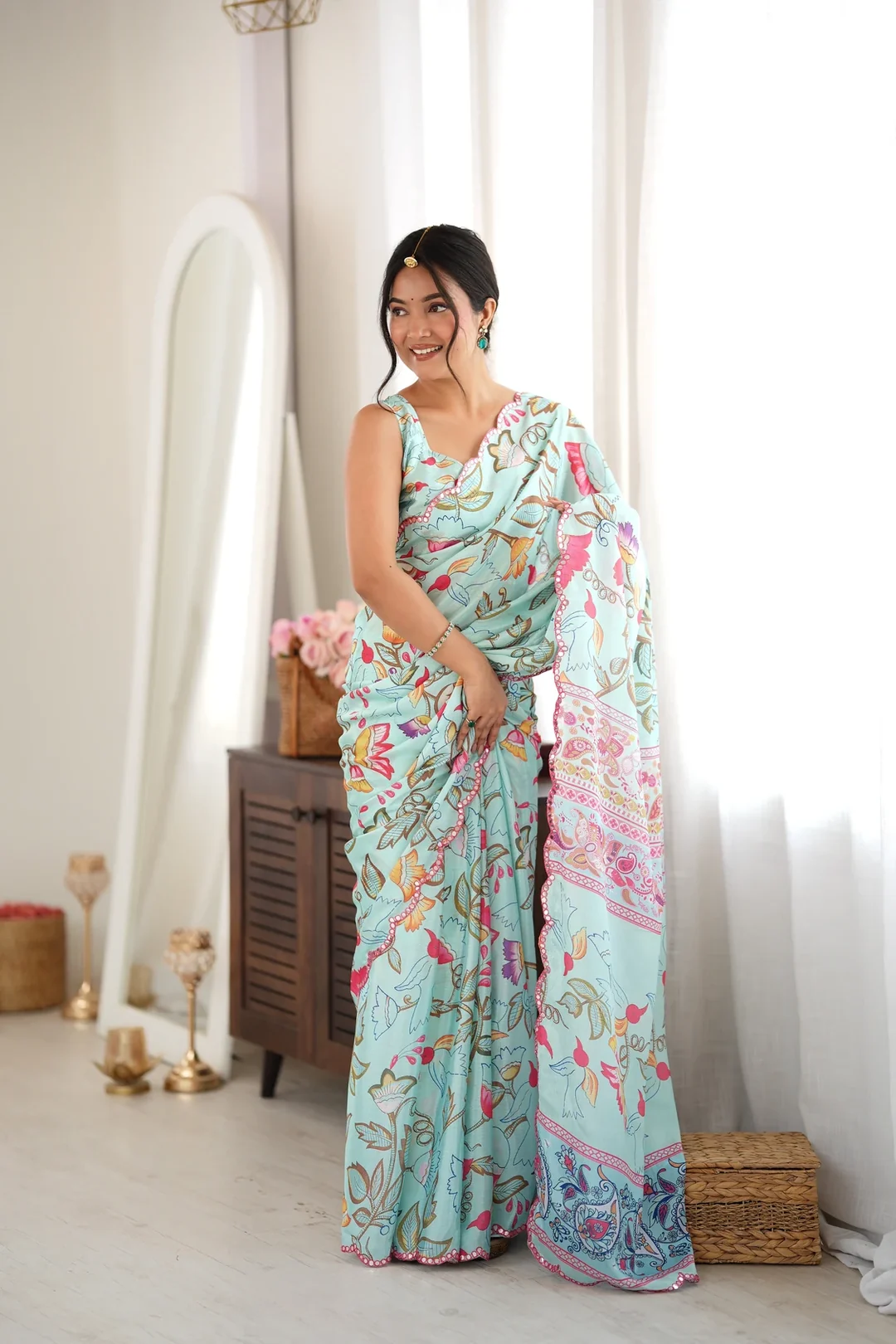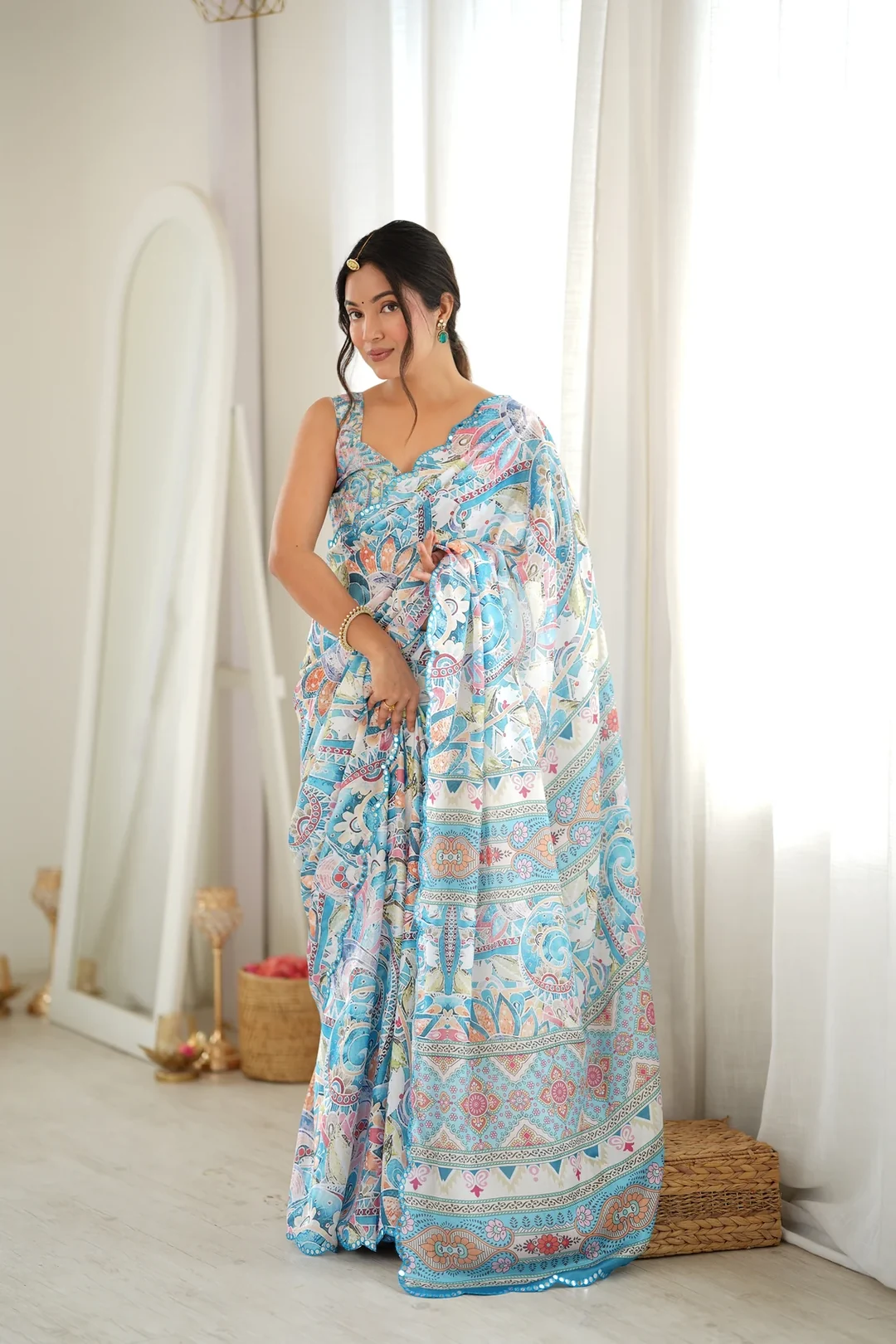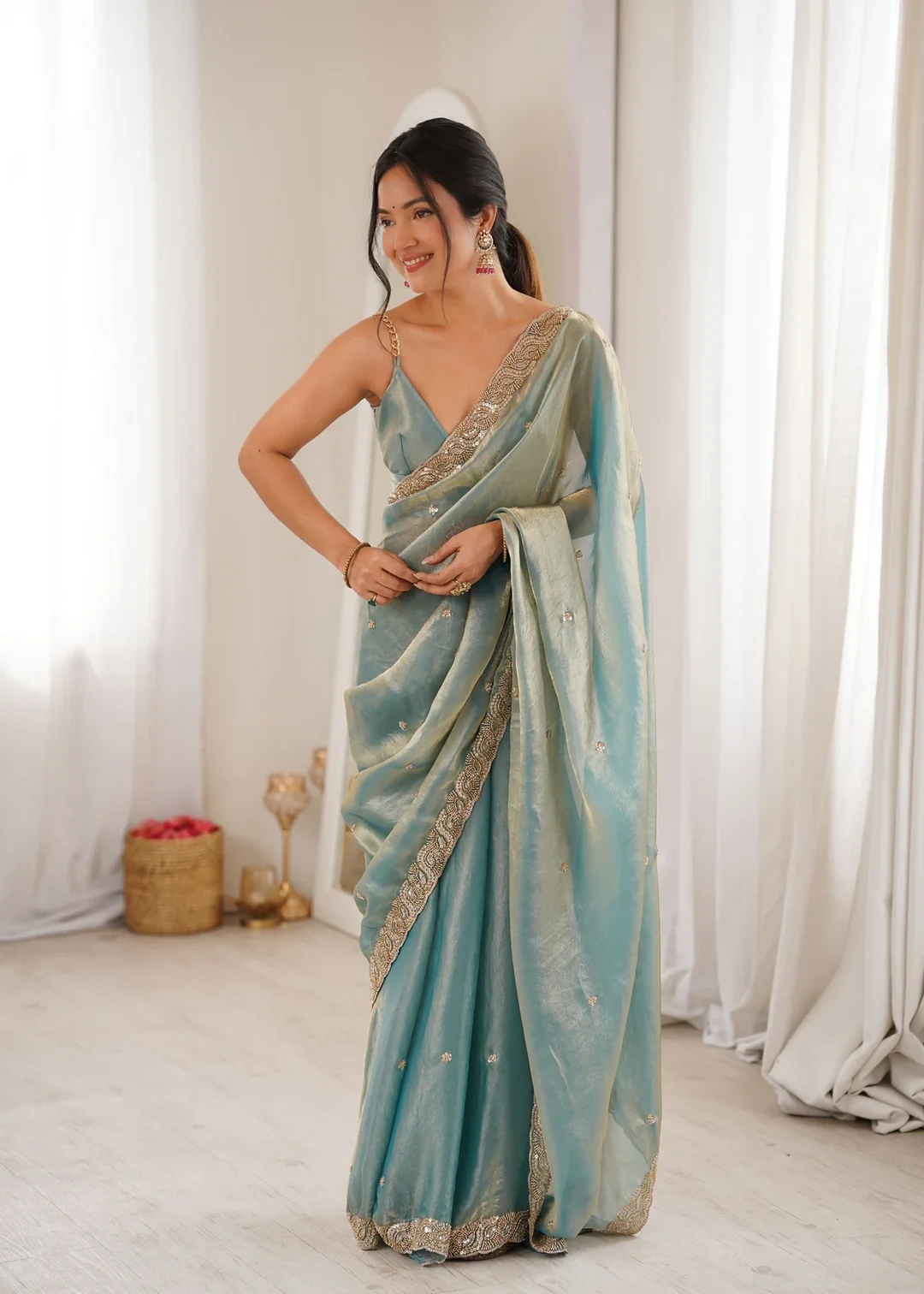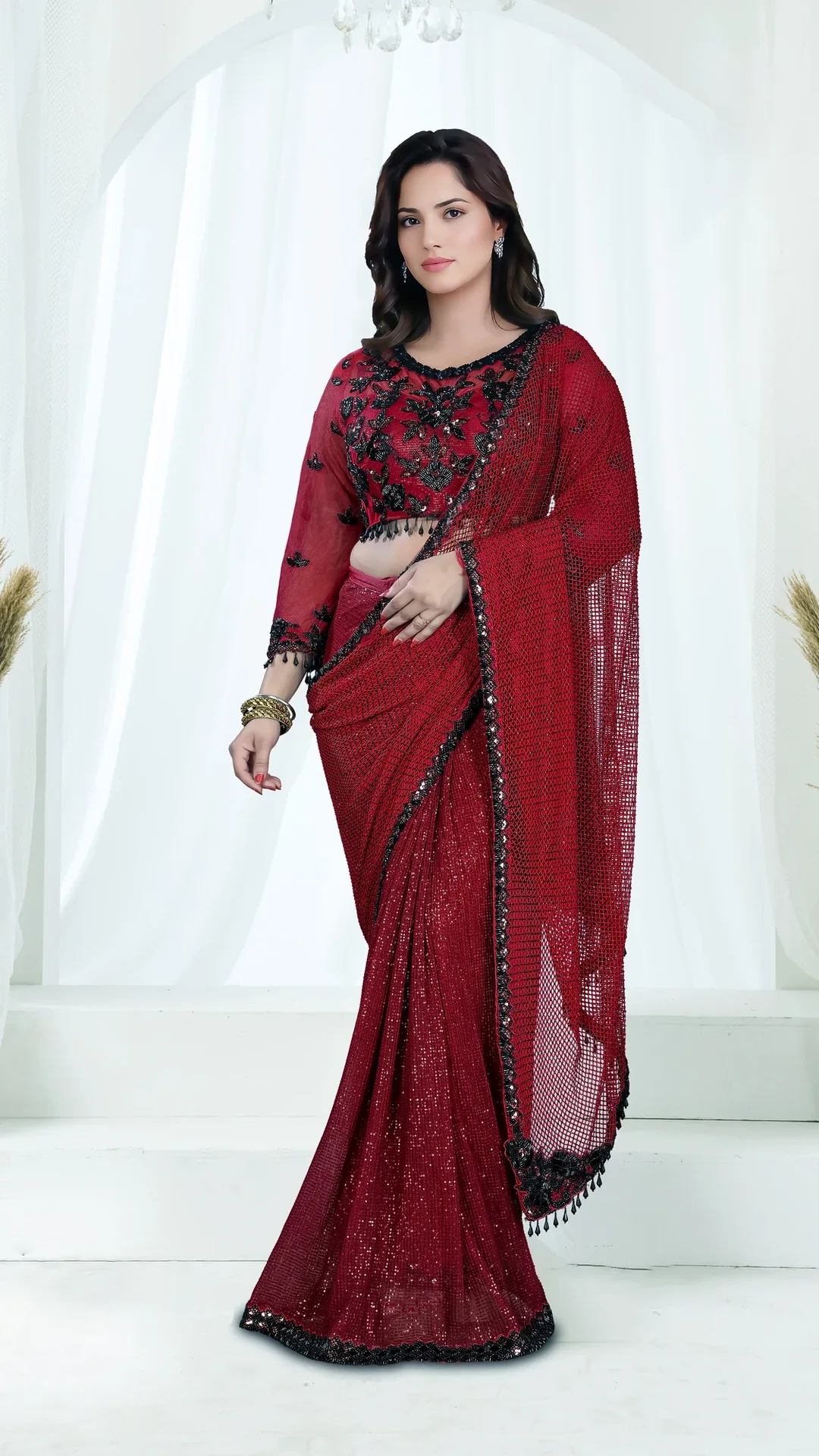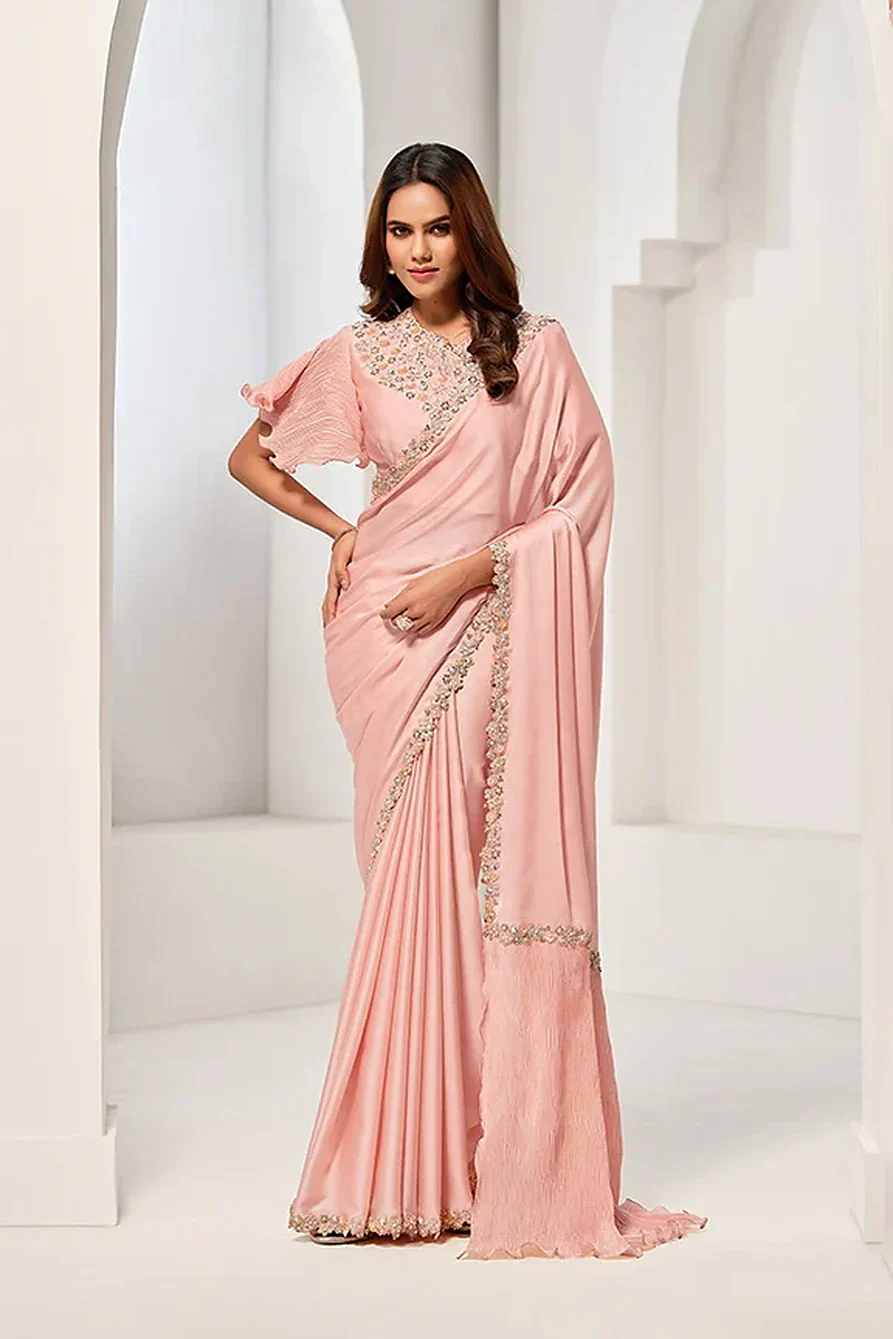

What is crepe satin silk?
One face is satin, giving a smooth reflective surface with weight and a clean fall, and the reverse is crepe, adding a fine grain and enough body to stop the cloth being slippery. It drapes with satin sheen but handles more like a georgette.
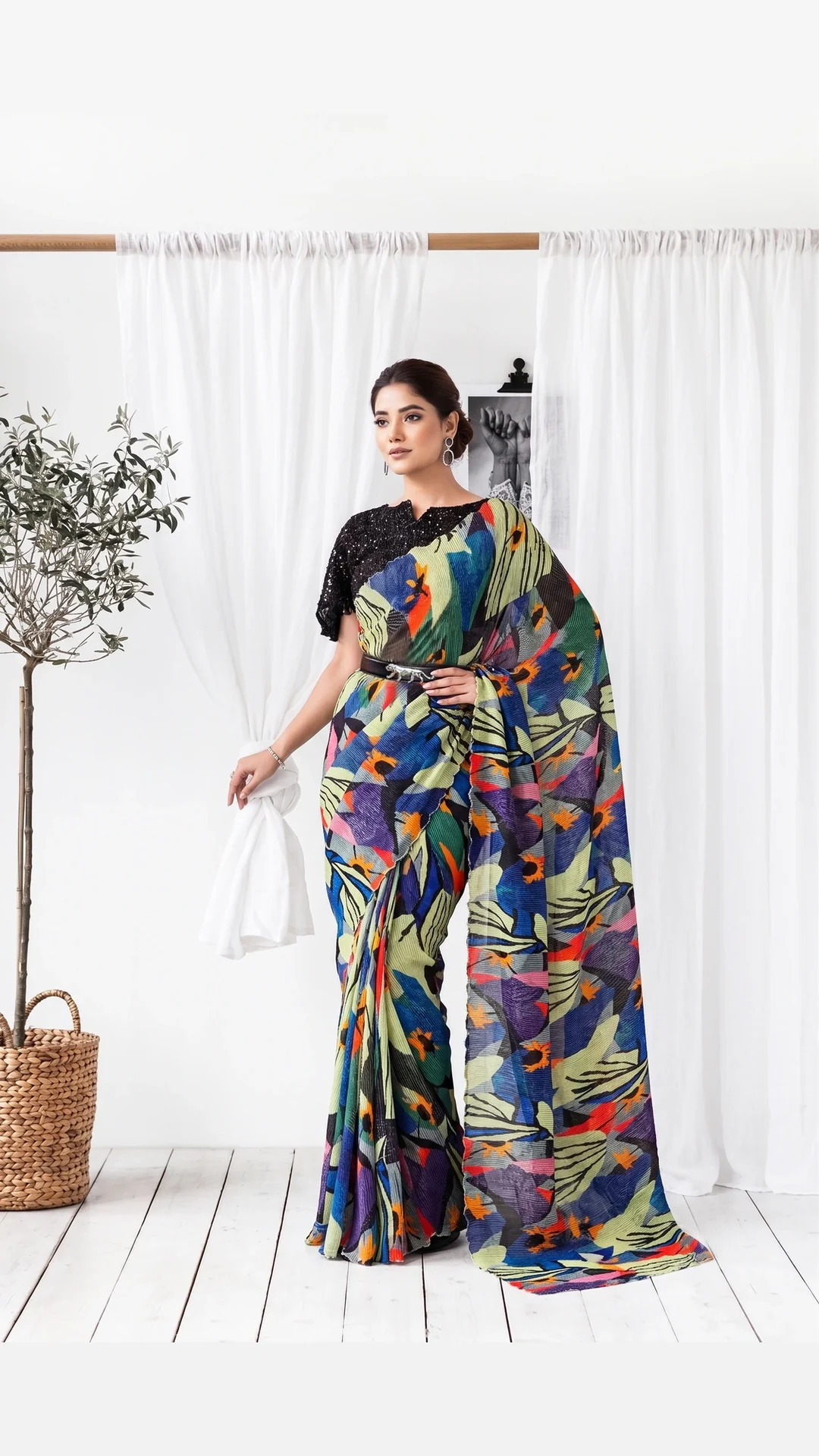
What is sequence work?
Sequence work stitches small flat discs onto the surface of the cloth so they catch light. On a satin ground they flash against the sheen rather than being absorbed by it, which gives the surface two different kinds of reflection working together.
Does handwork differ from machine work?
Yes. Handwork means the embellishment is placed and stitched individually rather than applied by machine, so density can vary across the design instead of repeating at a fixed pitch. Each element is anchored by its own stitch, which is also more secure.
Is this saree difficult to pleat?
Less than a plain satin. The crepe reverse adds body and grip, so the pleats hold where you set them rather than sliding open the way plain satin does. That is a real practical advantage of the crepe satin construction over satin alone.
Why does peach work with shiny embellishment?
A warm, soft ground keeps a shiny embellished saree from becoming harsh. Peach diffuses reflection rather than throwing it back hard, so the sequence work reads as detail rather than glare, and the saree flatters in both daylight and warm indoor light.
Can I return this?
Yes. Vpnam has a 7-day return window, and the full terms are in the Refund and Returns Policy. Contact us within 7 days of delivery if the item arrives damaged or defective, an item is missing, or a different product was sent, and keep the item, tags and original packaging unused while the claim is reviewed. Worn, washed, altered or tailored products cannot be returned.