Is a dark chinon saree less see-through?
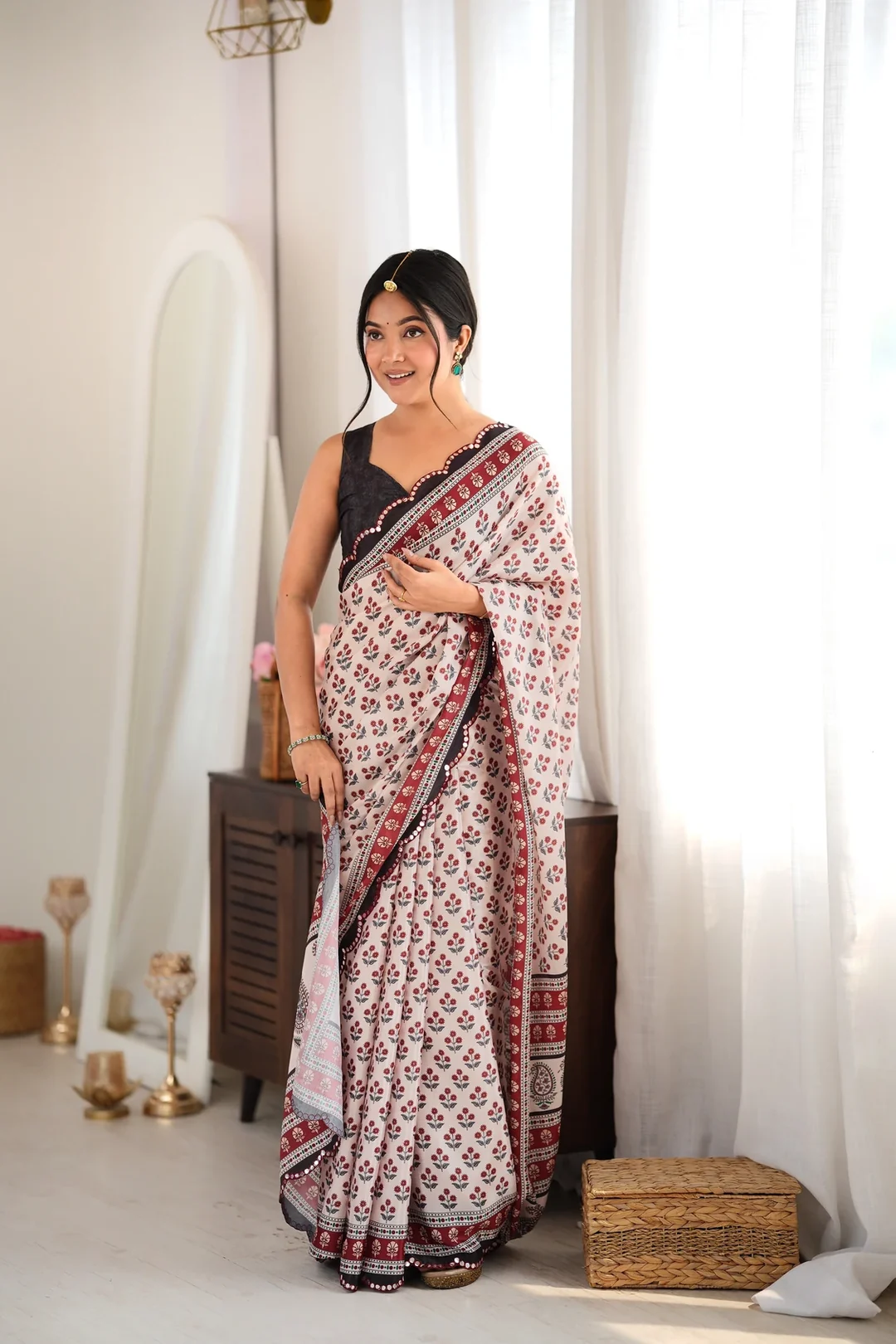
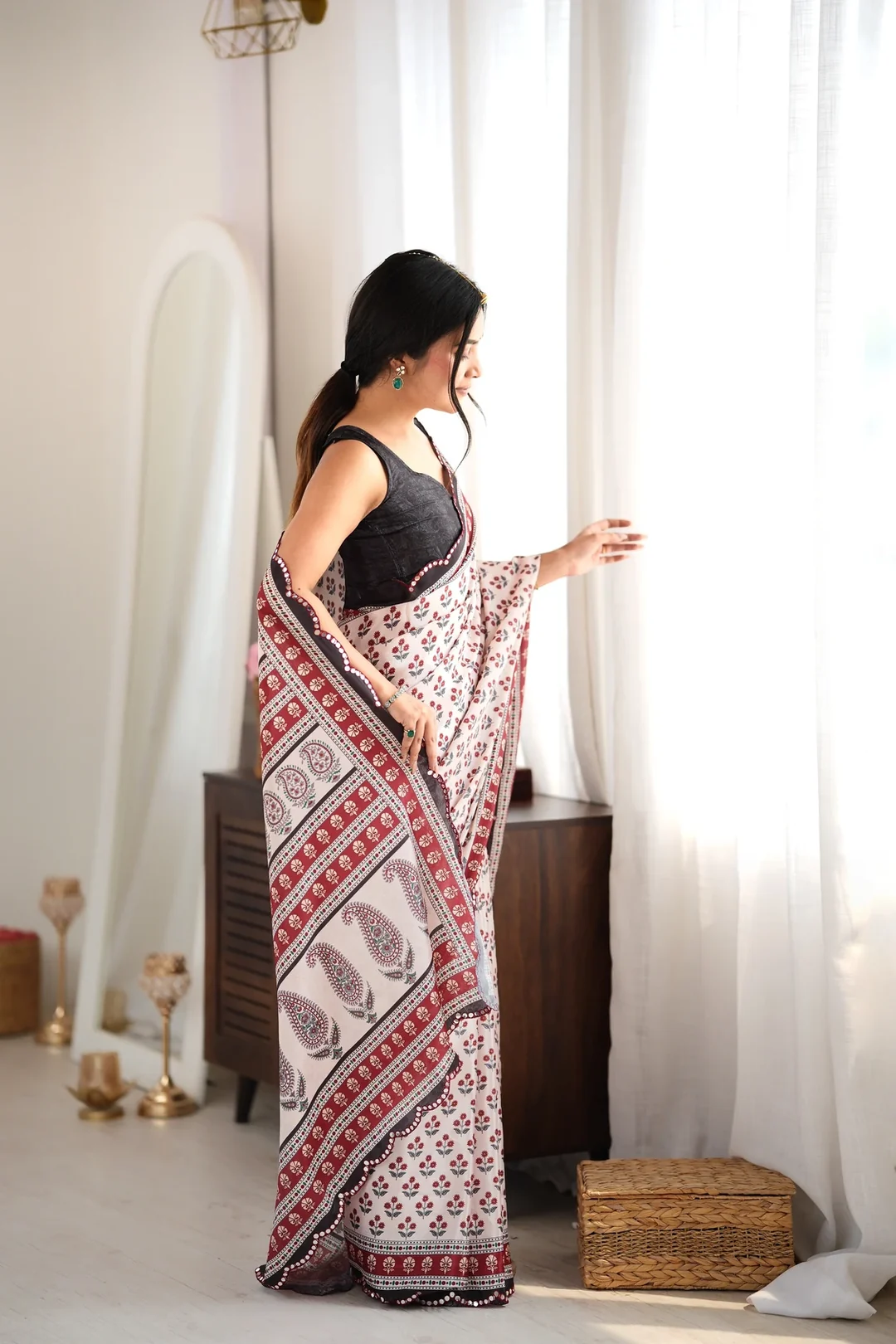
Yes. A deep dye fills the fabric more completely than a pale one, so a maroon chinon drape reads as more solid and less translucent than the same fabric in a pastel. The weight and the softness of the fall stay the same; only the opacity changes.
Why is maroon so common in festive wear?
Maroon has long been associated with celebration and auspicious occasions across many Indian regions, which is why it recurs so consistently in festive and ceremonial dressing. It also reads well under both daylight and warm indoor lamps, unlike shades that flatten after dark.
Does the mirror work show clearly on maroon?
It shows better on maroon than on most shades. A dark ground absorbs light rather than reflecting it, so there is nothing competing with the mirrors and each cut disc reads as a distinct bright point. Pale sarees reduce that contrast considerably.
What jewellery pairs with a maroon saree?
Gold, kundan and polki all sit naturally against maroon because the warm depth of the shade supports warm metals. Silver can look thin next to it. Since the saree already carries mirror work, one substantial piece usually reads better than several competing ones.
Is this saree suitable for an evening function?
Maroon performs well after dark. Deep shades hold their colour under warm artificial light where pastels can flatten, and the mirror cut work catches lamp light readily. A Diwali evening, a Lakshmi puja or a festive dinner all suit the shade and the weight.
Can I return this?
Yes. Vpnam has a 7-day return window, and the full terms are in the Refund and Returns Policy. Contact us within 7 days of delivery if the item arrives damaged or defective, an item is missing, or a different product was sent, and keep the item, tags and original packaging unused while the claim is reviewed. Worn, washed, altered or tailored products cannot be returned.