What does gajji mean in bandhani?
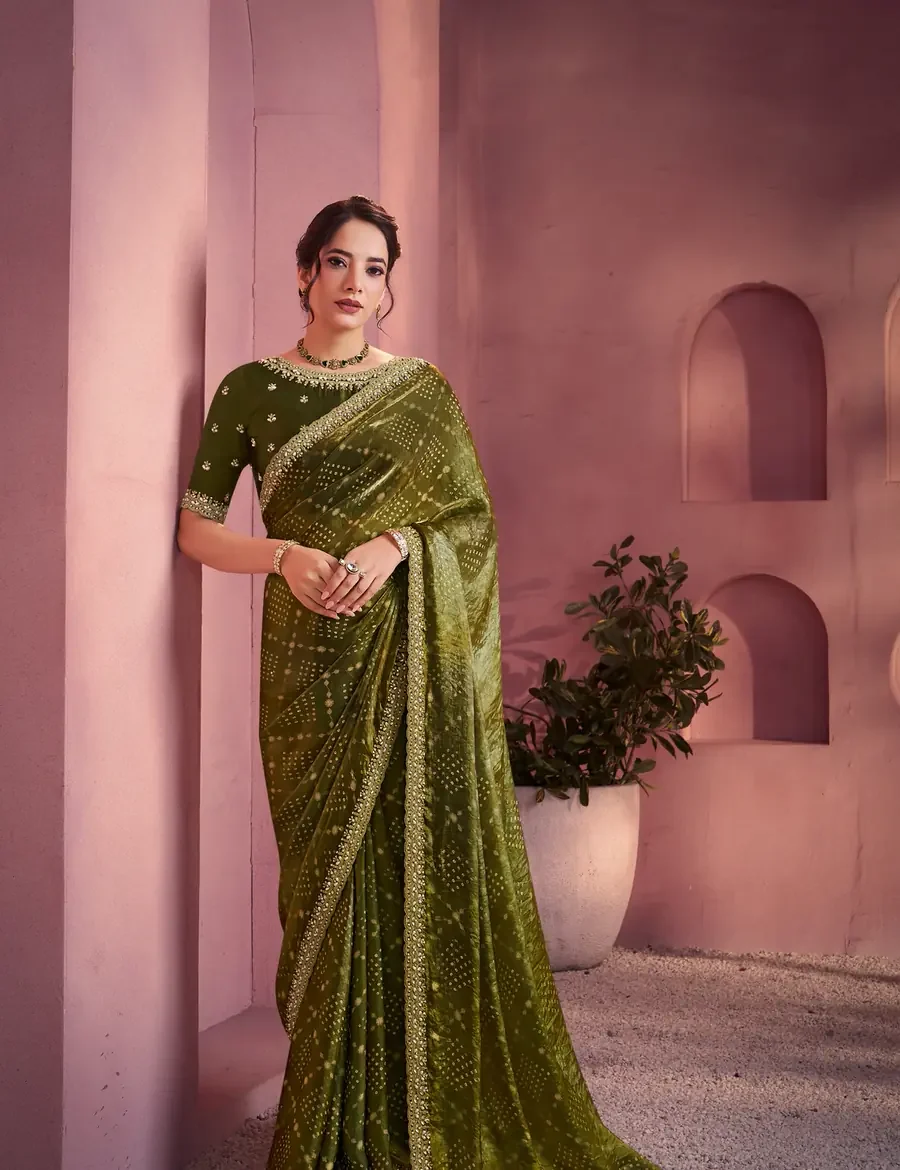
Gajji is a silk satin traditionally used as the base cloth for bandhani work in Kutch and Jamnagar. Its smooth, dense face holds tied dots sharply, which is why the combination has its own name. This saree carries a printed bandhani gajji pattern on Two Tone Satin Silk.
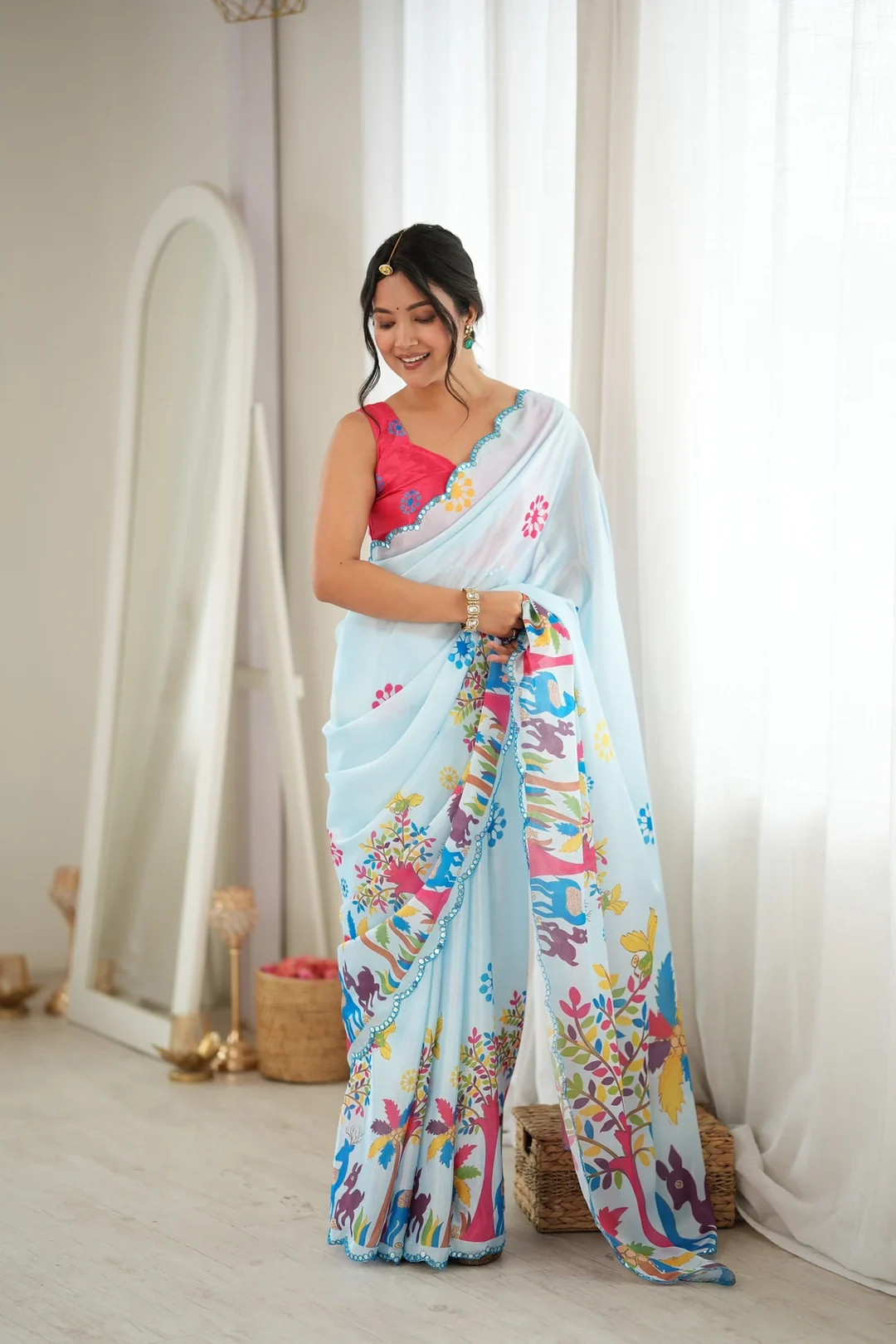
Is olive green a difficult colour to wear?
It is one of the more forgiving festive shades. Because it is muted rather than saturated, it reads well in daylight where a bright green can look harsh, and it works with both warm and cool skin tones. Oxidised silver jewellery generally suits it better than yellow gold.
What work is on this saree?
The specification records embroidery, stone and handwork. The embroidery and stones are applied over the printed ground rather than woven in, and the handwork designation means they are placed by hand, which gives slightly irregular spacing when you look closely at a motif.
Does the blouse fabric match the saree?
The blouse piece is Satin Silk while the saree body is Two Tone Satin Silk, so the two are related but not identical. No blouse colour is recorded against this SKU, so check the piece on arrival before deciding whether to use it as supplied or source a contrast.
When will this saree be sent out?
Dispatch is recorded as next day after stock confirmation, so the parcel leaves once the item has been verified as available rather than on the moment of ordering. Transit time after that depends on the courier network serving your delivery pincode.
Can I return this?
Yes. Vpnam has a 7-day return window, and the full terms are in the Refund and Returns Policy. Contact us within 7 days of delivery if the item arrives damaged or defective, an item is missing, or a different product was sent, and keep the item, tags and original packaging unused while the claim is reviewed. Worn, washed, altered or tailored products cannot be returned.