What is bandhej?
Bandhej is another name for bandhani, the dotted tie-resist dyeing tradition of Gujarat and Rajasthan where cloth is knotted at many tiny points before dyeing. The two terms are used interchangeably, with bandhej more common in Rajasthan and bandhani in Gujarat.
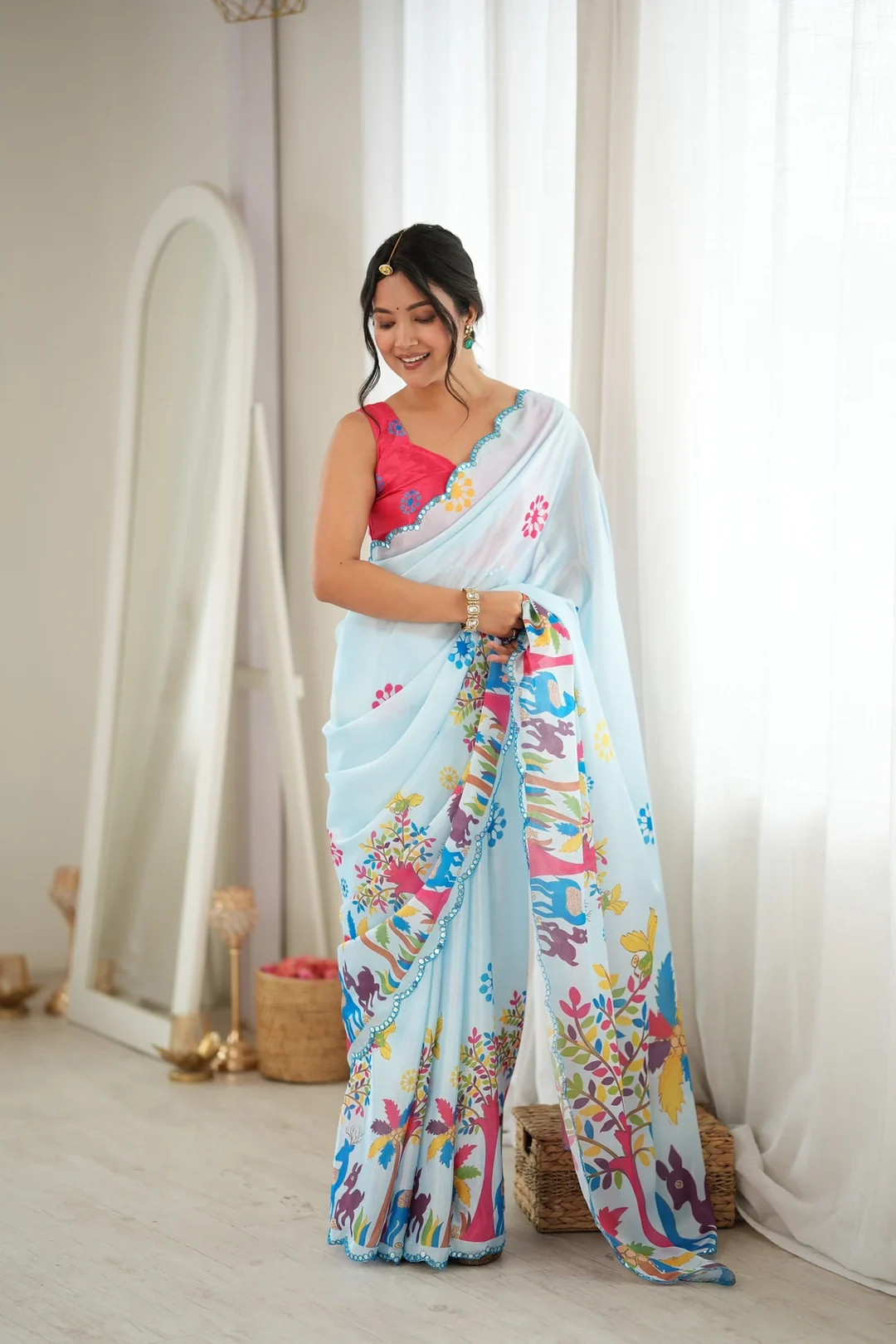
What does combining bandhej and leheriya achieve?
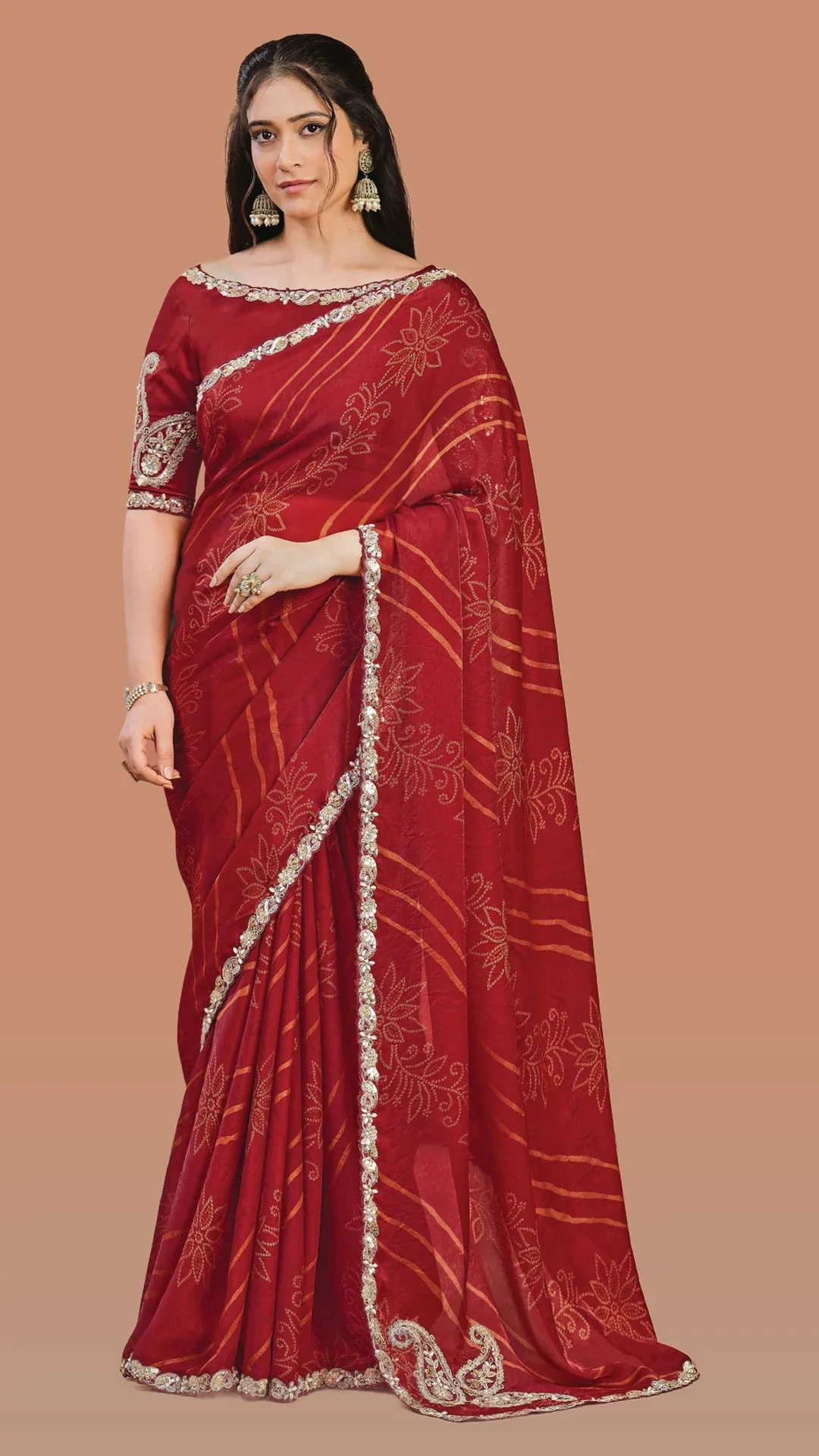
Bandhej supplies dotted resist motifs while leheriya supplies diagonal wave bands, so the two together give a layered pattern with both dots and stripes. Achieving that by hand dyeing would need two separate tying and dyeing processes, which digital printing accomplishes in one.
What is soft satin as a blouse fabric?
Soft satin is lighter and more fluid than a standard satin silk, with a gentler sheen. As a blouse fabric it drapes more closely than a firm satin, which some wearers prefer for a fitted bodice. It is supplied here unstitched at 0.80 m.
Is this saree heavily worked?
It carries the full work set for this range: dual sequins embroidery with pearl, stone and mirror handwork. That places it among the more embellished pieces in the group, and the mirror element in particular makes it read strongly from a distance.
Where is this style traditionally worn?
Bandhej and leheriya both originate in Rajasthan and Gujarat, and the combined look is closely tied to celebrations in those regions. A garba night, a wedding function or a Teej celebration all suit it, and it reads instantly recognisable in that context.
Can I return this?
Yes. Vpnam has a 7-day return window, and the full terms are in the Refund and Returns Policy. Contact us within 7 days of delivery if the item arrives damaged or defective, an item is missing, or a different product was sent, and keep the item, tags and original packaging unused while the claim is reviewed. Worn, washed, altered or tailored products cannot be returned.