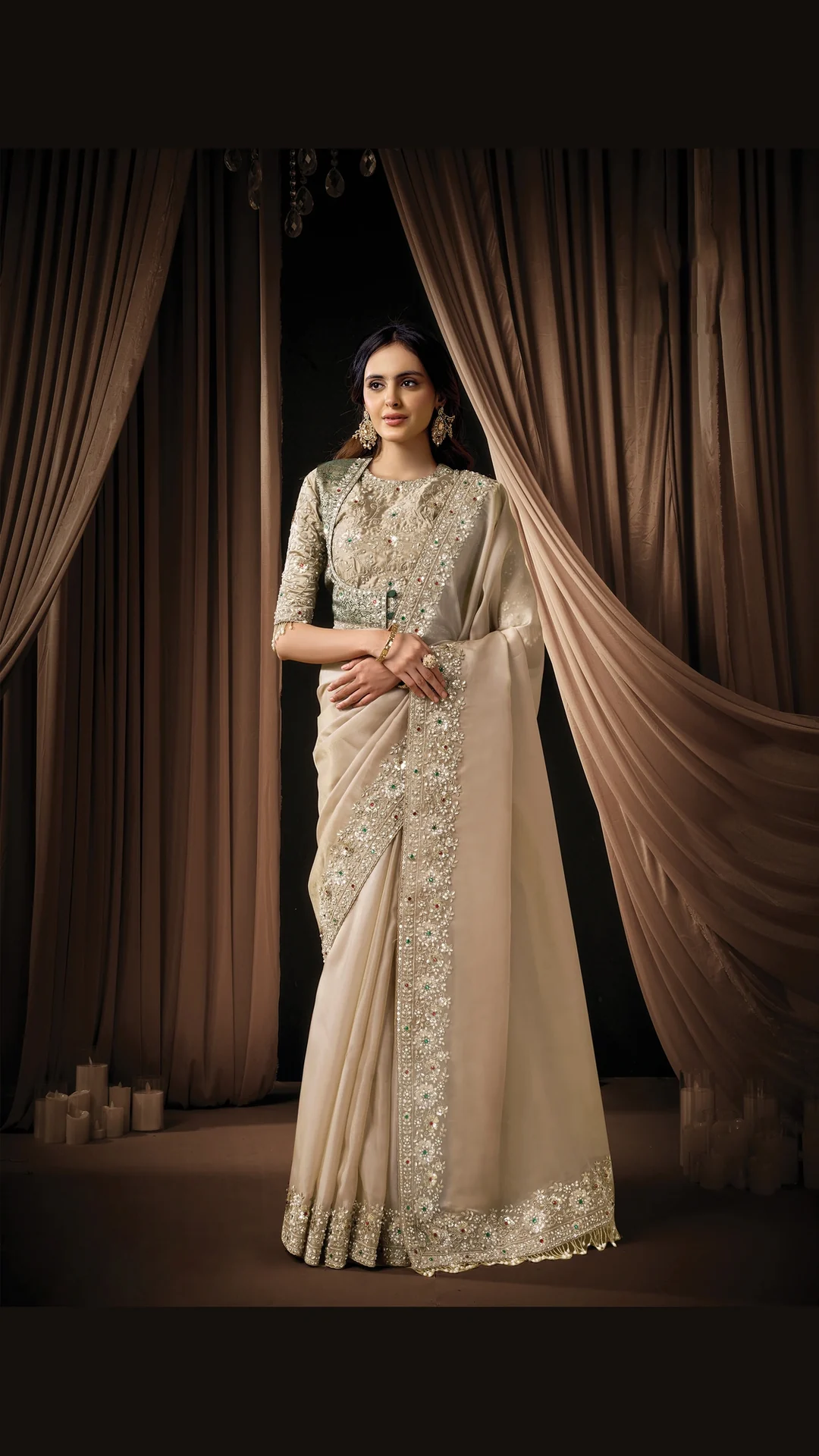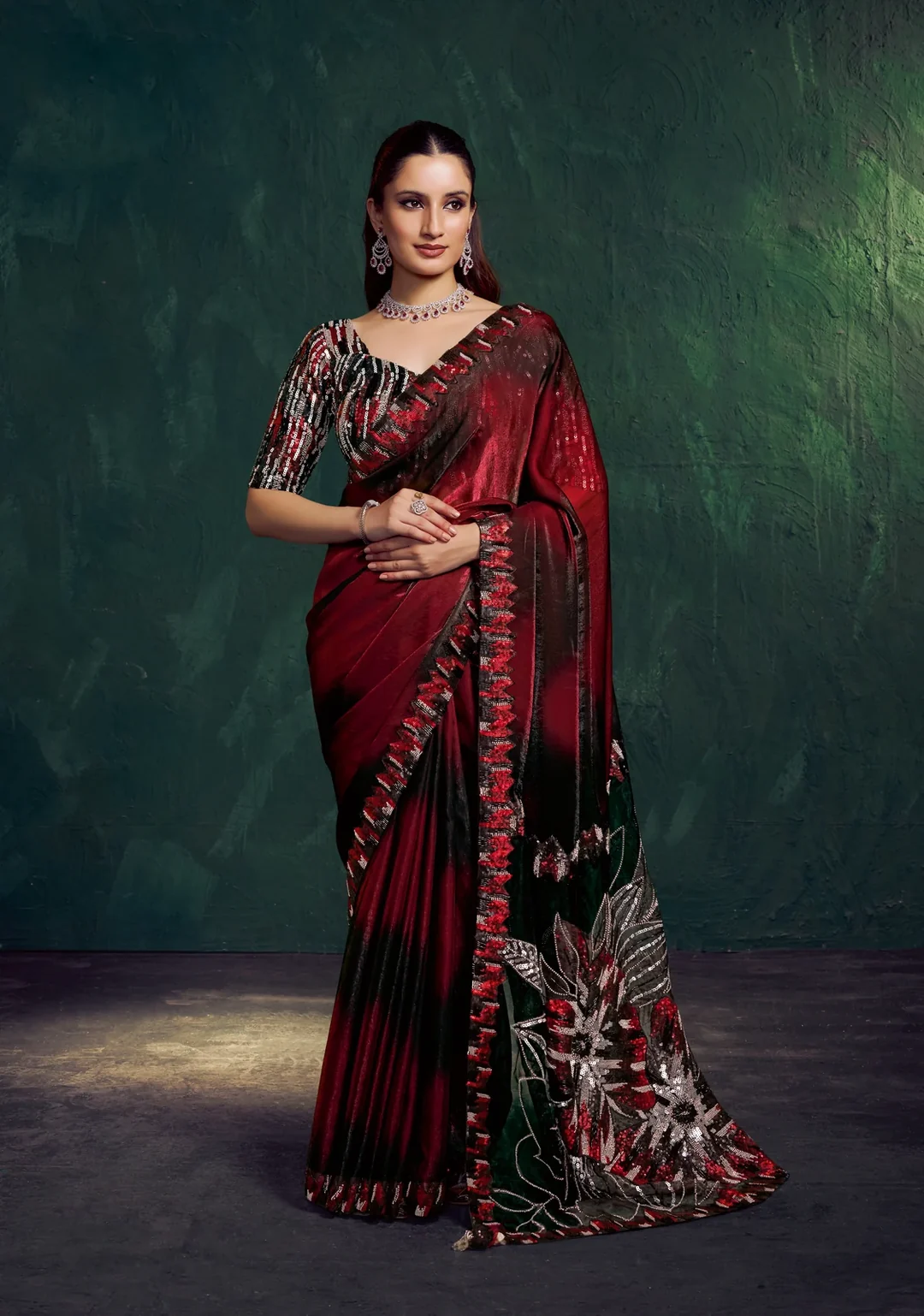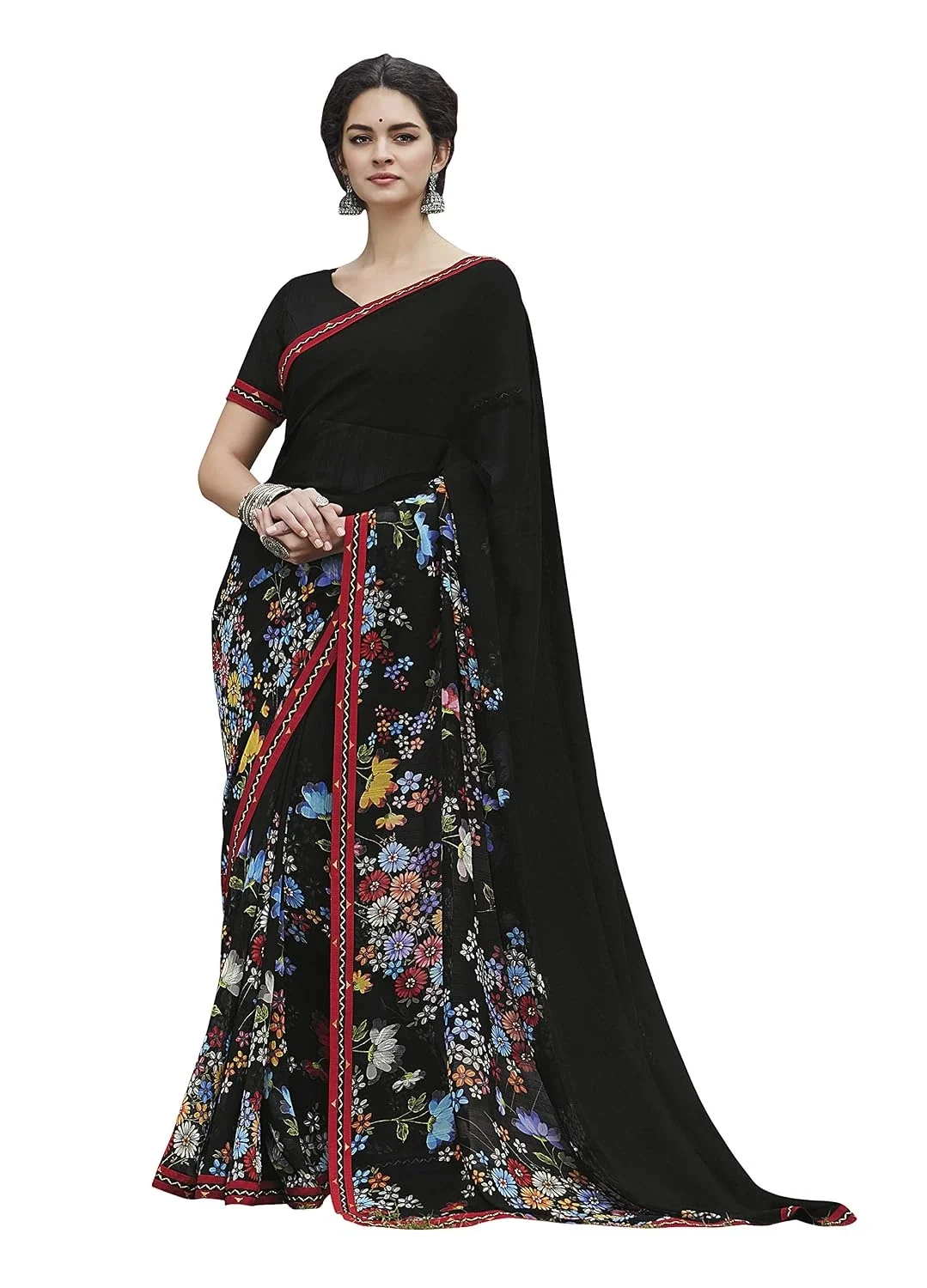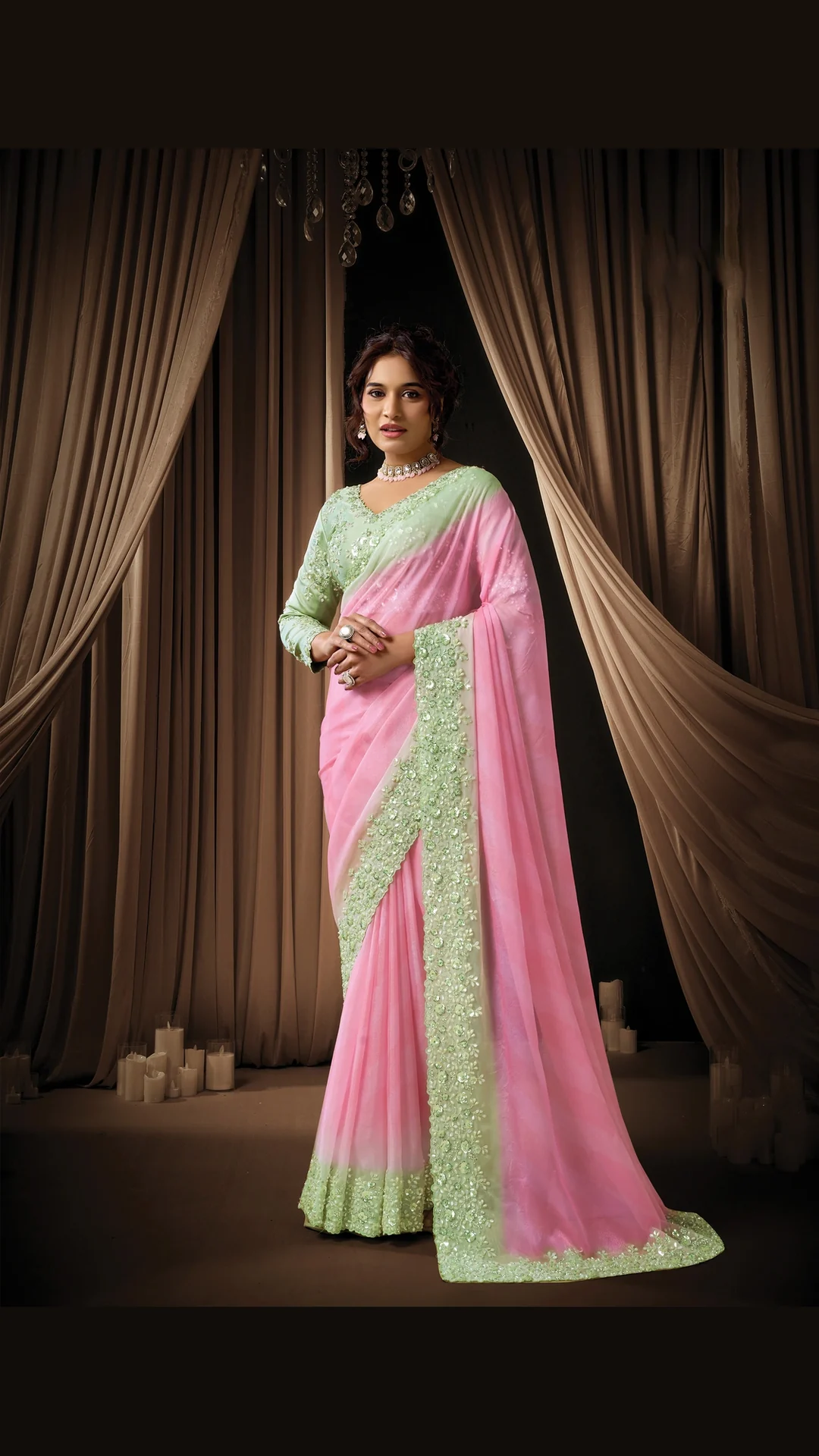
What is leheriya and why is this one called digital?
Leheriya is the traditional diagonal wave-stripe pattern of western India, usually made by rolling and resist-dyeing the cloth. Digital leheriya means the wave design has been printed onto the fabric instead, which gives finer colour gradients and cleaner stripe edges than resist dyeing produces.
Is georgette a good fabric for someone new to sarees?
It is one of the easier choices. Georgette has a fine grain that grips itself, so pleats stay where you set them instead of sliding apart the way very smooth fabrics do. It also creases less than crisp fabrics, which helps across a long function.
Does the sequin work sit on top of the print?
Yes. The leheriya is printed into the fabric surface first, and the dual sequins, embroidery and pearl detailing are then applied over that printed ground as a separate layer. That is why the worked sections stand slightly proud while the printed areas stay flat.
Which blouse fabric is supplied with this saree?
An unstitched 0.80 mtr piece of milky satin. Milky satin has a soft sheen in a pale tone, which contrasts against the printed georgette. It needs to go to a tailor for cutting and stitching to your measurements before the saree can be worn.
Is this saree see-through?
Georgette is lightweight and semi-sheer in plain form, though the digital print and the worked panels reduce how much light passes through. As with most georgette sarees, it is worn over a well-fitted petticoat in a matching or close shade, which is the normal practice.
Can I return this?
Yes. Vpnam has a 7-day return window, and the full terms are in the Refund and Returns Policy. Contact us within 7 days of delivery if the item arrives damaged or defective, an item is missing, or a different product was sent, and keep the item, tags and original packaging unused while the claim is reviewed. Worn, washed, altered or tailored products cannot be returned.