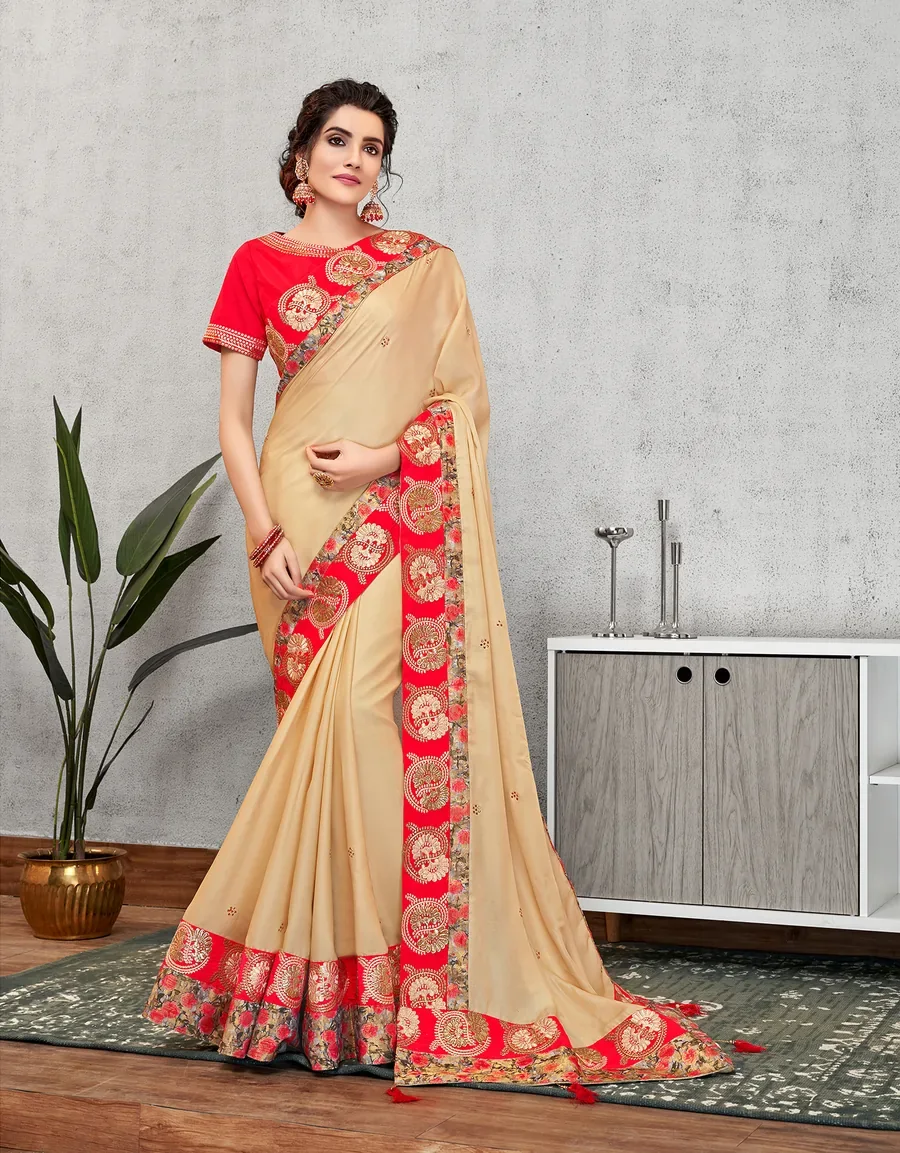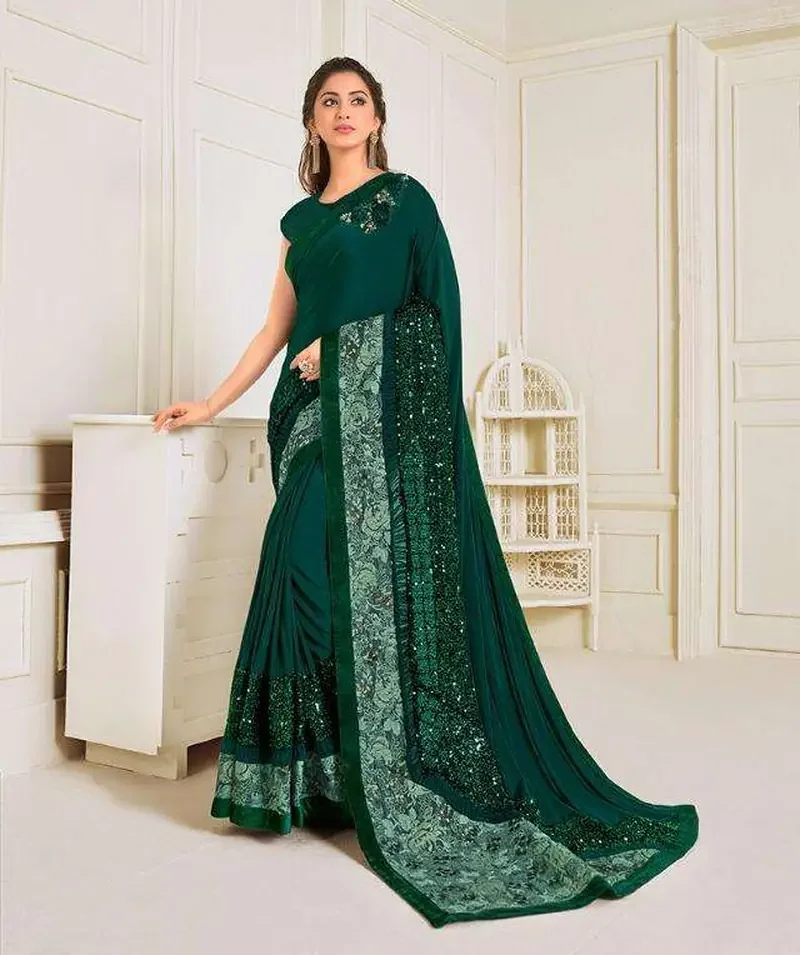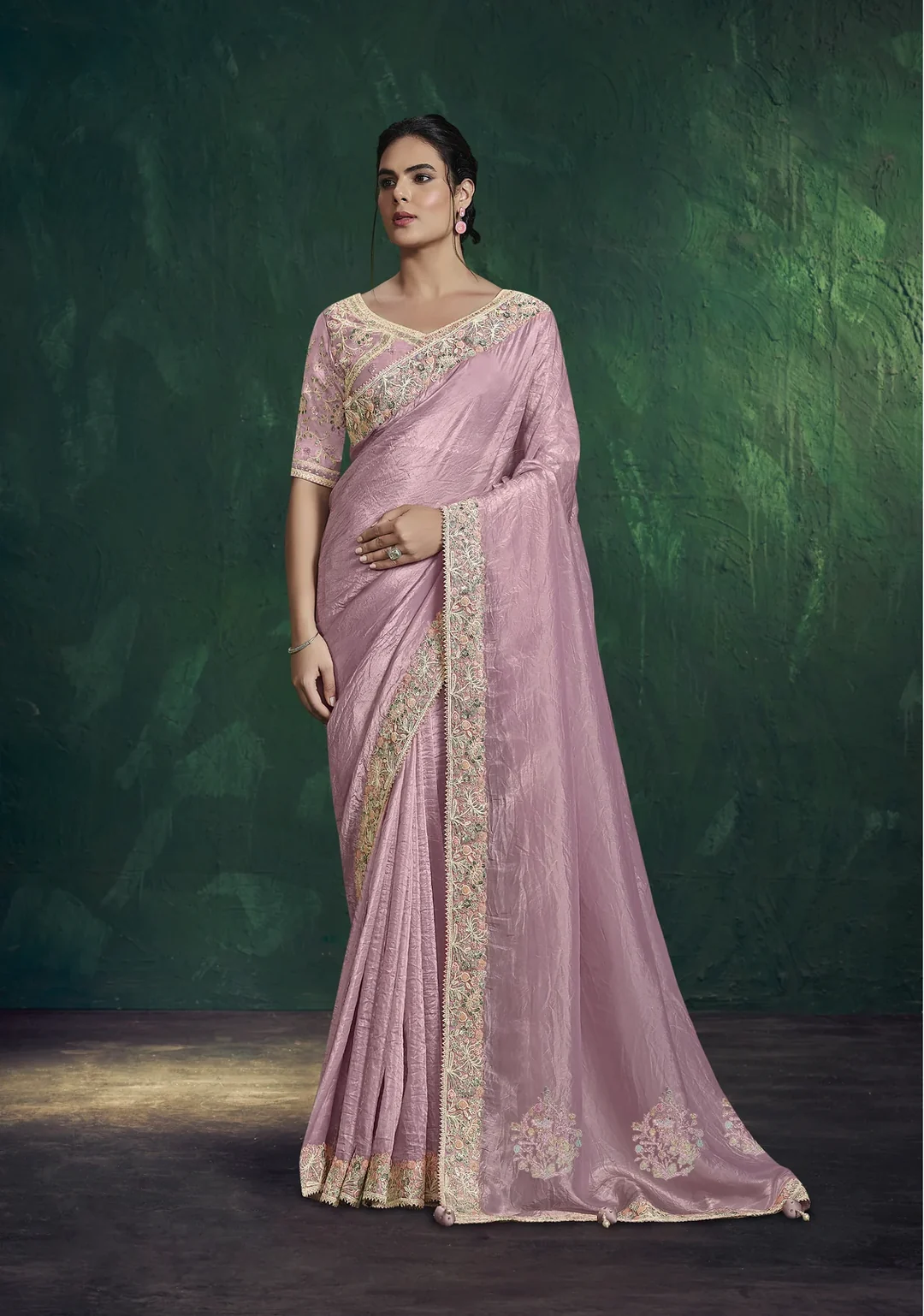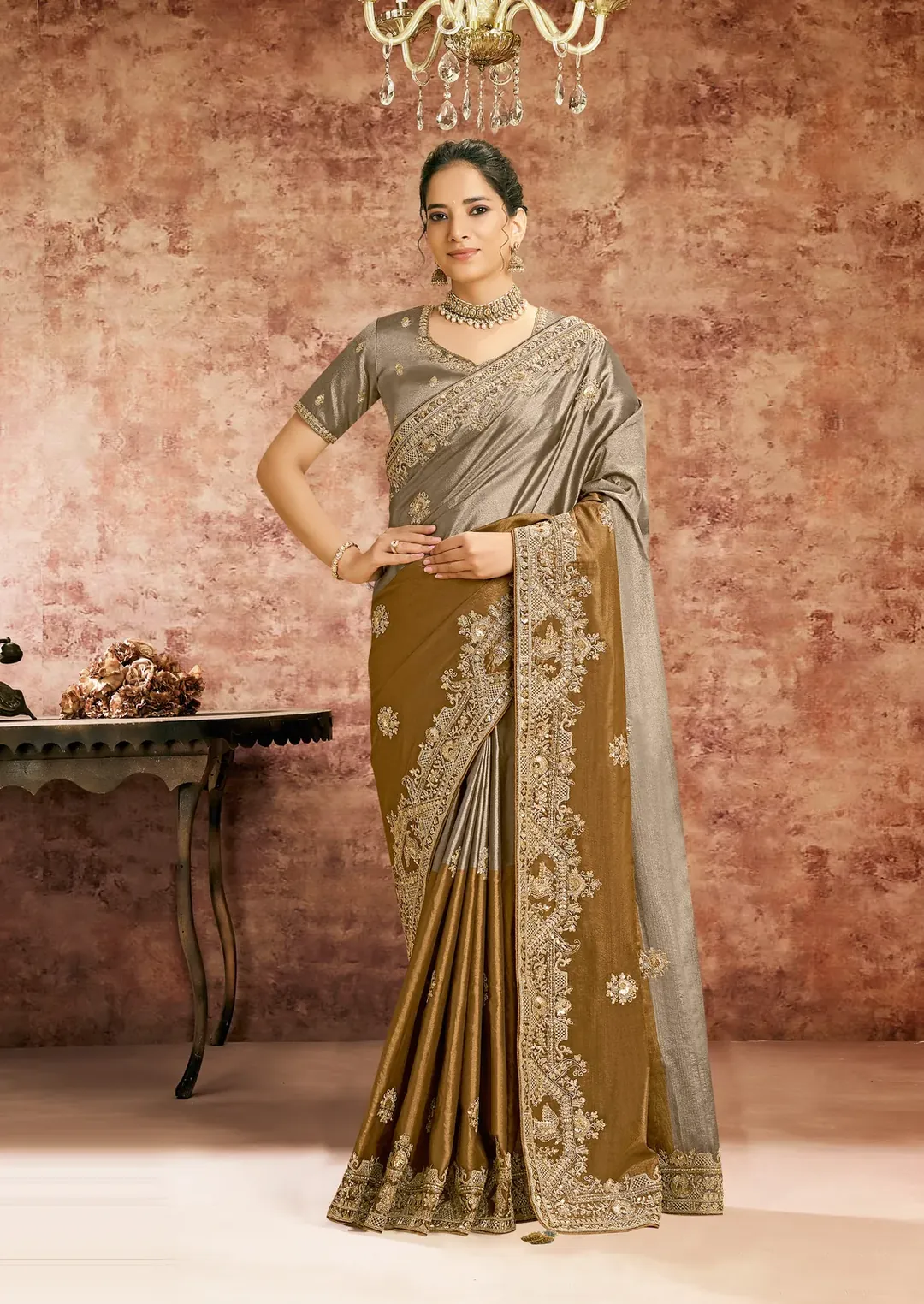
Designer Sarees
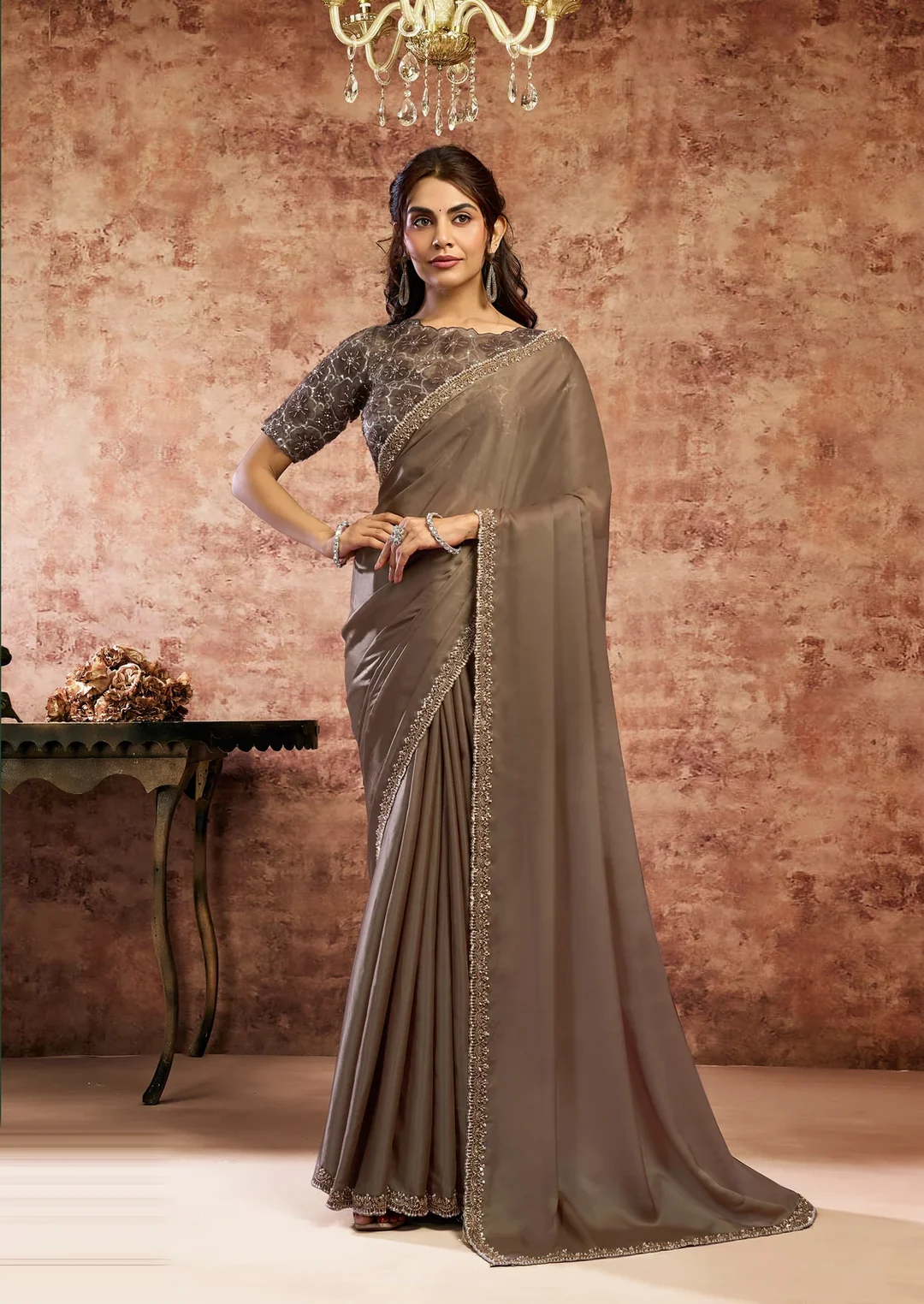
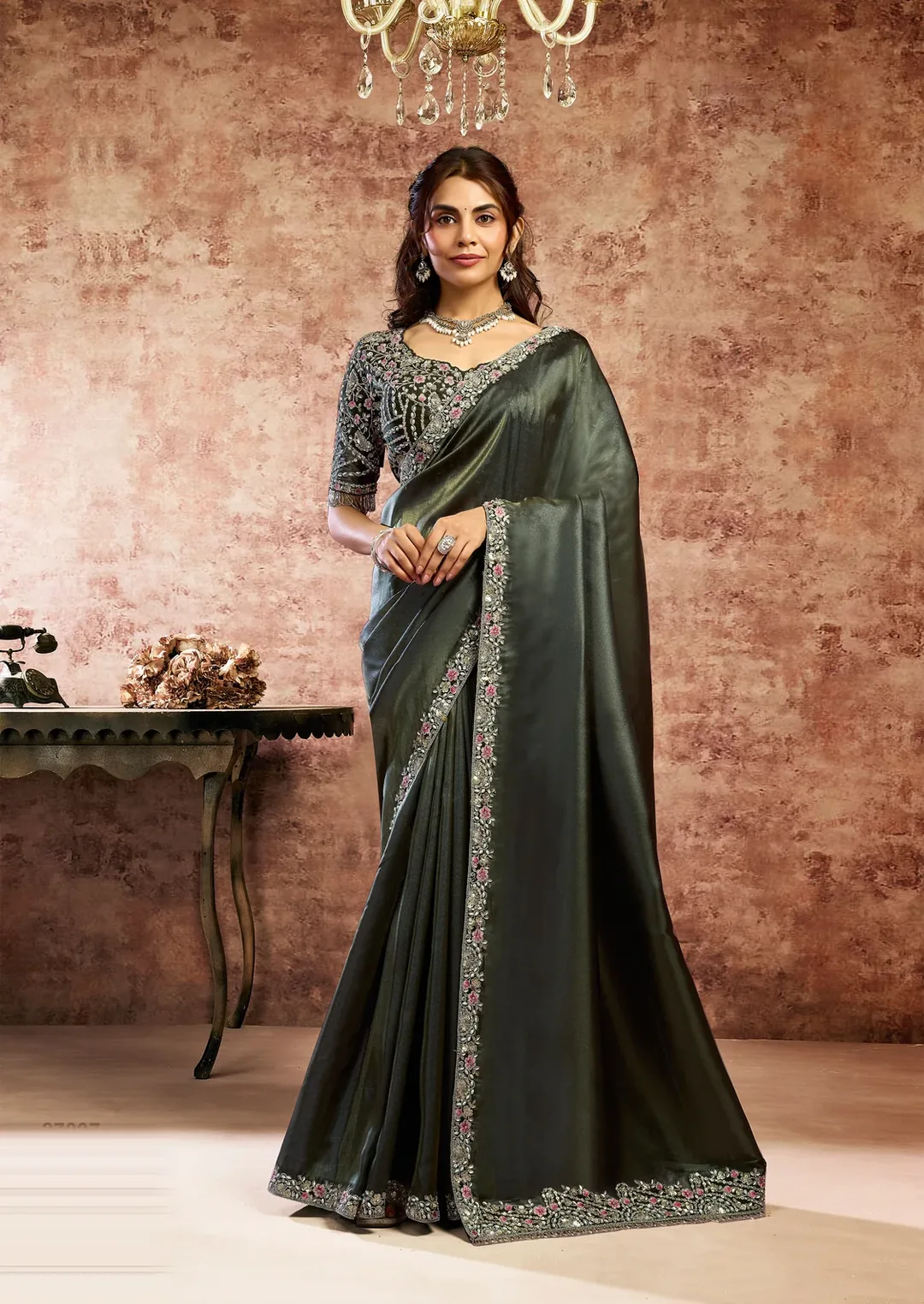
Brown Kanjivaram Zari Silk Designer Saree with Aari & Emerald Stone Work
₹8,899₹14,900
120 products
Designer Sarees
Designer Sarees
Designer Sarees
Designer Sarees
Designer Sarees
Designer Sarees
Designer Sarees
Designer Sarees
Designer Sarees
Designer Sarees
Designer Sarees
Designer Sarees
Designer Sarees
Designer Sarees
Designer Sarees
Designer Sarees
Designer Sarees
Designer Sarees
Designer Sarees
Designer Sarees
Designer Sarees
Designer Sarees
Designer Sarees
Designer Sarees
A designer saree carries pattern that was added to the cloth after weaving, by embroidery, sequin, bead or applique work. A normal saree may be plain, printed or woven with the pattern built into the cloth. Of the 88 designer sarees here, 41 name embroidery or thread work and only two are digitally printed.
Zardoshi is metal-wire embroidery. Fine coiled wire is cut into short pieces and stitched over a padded outline, so the motif stands proud of the cloth and catches light from every angle. It is the heaviest of the traditional Indian surface techniques and the most formal. Three listings across the Vpnam catalogue currently carry it.
Resham is silk-floss thread. It sits matte, feels soft and forgives handling, which makes it the most wearable of the worked finishes. Zari is flat metallic thread laid on the surface and couched down, so it reflects light along a line rather than at a point. Resham appears on 19 Vpnam listings, zari on 11 designer sarees.
Forty-seven listings state a blouse type. Thirty-five give an unstitched blouse piece, eight a stitched blouse and four a semi-stitched one, and 30 confirm a blouse piece is included in the bundle. Thirty-eight state that piece as 0.80 metre. Thirty listings give the blouse fabric as raw silk, which stitches up crisply.
Twenty-seven listings state 5.50 metres for the saree itself, with a 0.80 metre blouse piece alongside it. Twenty-eight give a combined figure of 6.3 metres including the blouse piece. That is the standard Indian saree length and suits most heights and drape styles without shortening the pallu.
At Vpnam the range is ₹1,162 to ₹7,321, with the middle near ₹3,672. Price here follows the density and type of surface work rather than the size of the saree. Sequin and thread embroidery sit lower, while zari, cord and multi-technique handwork sit higher, because each is counted by the hours laid onto the cloth.
Press from the reverse side only, with a thin cotton cloth between the iron and the saree, and keep the plate off any sequin, zari or bead directly. Sequins are plastic and will melt or cloud under direct heat, and zari dulls. Steam from a distance is safer than contact pressing on a heavily worked pallu.
Georgette holds heavy work best. Its grainy weave grips the stitches and it does not distort under weight, which is why 15 of the 88 designer sarees use it. Chiffon is sheerer and lighter and suits scattered work rather than a dense border. Lycra stretches, so it drapes easily but can pucker under very dense embroidery.